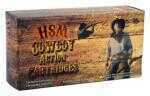
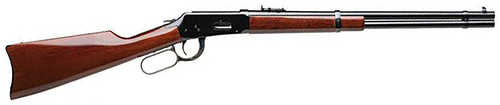
One lever-action repeating rifle truly won the favor of hunters and shooters across the country: The Model 1894. Designed with power and practicality in mind, John M. Browning was the innovative mind behind the first sporting rifle that was made to handle the new high-velocity, smokeless powder ammunition introduced in the late 19th Century. With its ease of operation, quick handling, and chambering for one of the most popular hunting cartridges, .30-30 Winchester, the Model 1894 is a classic design that is just dependable and revered today since its introduction in 1894. This 1894 carbine reproduction features a forged steel frame, carbine style buttstock & forend, blued parts, and round barrel.
Brand Taylors & Company
Category Rifles
Series Carbine
Caliber 38-55 Win
Barrel Length Range 20" to 20.99"
Model 1894
Stock Finish Group Brown
Capacity 5+1
Stock Material Wood
Action Lever
Oal 37.50"
Hand Right
Sights Blade Front, Buckhorn Rear
Barrel Finish Blued
Receiver Material Steel
Barrel Description Round
Barrel Length 20"
Max Capacity 5
Receiver Finish Blued
Weight 7.05 lbs
Stock Finish Walnut
Caliber Dictionary
The Below Information Has Been Provided From Our Gun Caliber Dictionary And Is Meant For Informational Purposes Only. It Is Not Intended to Describe The Unique Specifications For This Ammunition.
The 38-55 Winchester (38-55 Ballard) was introduced by Ballard as a target cartridge in 1884. It and the 32-40 were the original chamberings for the Winchester Model 1894 because, although the action was designed for smokeless powder, the 30-30 wasn't ready for release. The 38-55 uses a .379-inch bullet of 255 grains at 1320 feet per second. Although adequate for deer-sized game at short to medium ranges, the 38-55 was considered extremely accurate and often chambered in single-shot target rifles. Winchester dropped the cartridge for some years, but due to both demand for older rifles and reissues of classics Winchester brought the 38-55 back and continues to offer factory ammunition. Its rimmed case has been the basis for numerous later cartridges, including the 30-30 and 225 Winchester and the 22 Savage High Power. — Craig Boddington