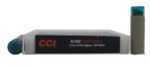
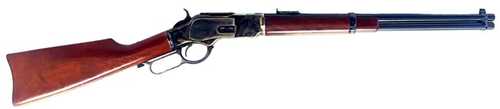
The 1873 Carbine is a lightweight variation of the iconic lever action. The short round barrel means less heft and more maneverability whether hunting, competing, or simply enjoying time at the range. They feature a barrel band and a flat butt plate shape. The carbine is made to move. This rifle is a great option for a younger shooters, as they are the lightest 1873 rifle variation available. The 1873 carbine features a rear ladder sight, case hardened frame with a walnut stock.
MANUFACTURER: Taylor's & Company
FAMILY: 1873 Series
MODEL: 1873 Rifle
TYPE: Rifle
ACTION: Lever Action
CALIBER/GAUGE: 45 Colt
FINISH: Blued
FINISH TYPE: Blued
STOCK: Wood Stock
STOCK/GRIPS: Walnut
Barrel: 19"
Overall Length: 37.87"
RATE-OF-TWIST: 1-in-16"
Capacity: 10 + 1
SIGHTS: Ladder Rear | Blade Front
SIGHT TYPE: Fixed Sights
WEIGHT: 7.48 lbs.
SHIPPING WEIGHT: 8.55 lbs.
RECEIVER: Color Case Hardened Steel
Caliber Dictionary
The Below Information Has Been Provided From Our Gun Caliber Dictionary And Is Meant For Informational Purposes Only. It Is Not Intended to Describe The Unique Specifications For This Ammunition.
The 45 Colt (45 Long Colt) was introduced in 1873 in Colt's Single Action Army. Adopted by the U.S. military in 1875, it served until 1892 when it was replaced by the less powerful (and unsatisfactory) 38 Long Colt. Originally loaded with 40 grains of blackpowder and a 255-grain bullet the 45 Colt produced about 900 feet per second for more than 400 foot-pounds of energy, a powerful handgun cartridge for its day--and any day. Using a .454-inch bullet, today's standard load retains the 255-grain bullet at 860 fps. Lighter bullets at somewhat higher velocities are available. 45 Colt was the most common chambering in Colt's single action. Today it is chambered in virtually all centerfire single-action revolvers and has been chambered in numerous large-frame double-action revolvers. 45 Colt is the most popular revolver cartridge in cowboy action shooting, and remains a powerful and effective personal defense cartridge, its only drawback being the necessity for a large revolver to house it. — Craig Boddington