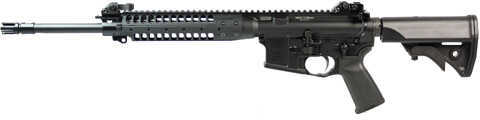
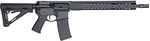
LWRC M6 Individual Carbine is developed to meet the requirements of U.S. Army Individual Carbine program. Features ambidextrous lower reciever with dual controls for the bolt catch and release, magazine release and fire control. Monoforge upper receiver features a user configurable rail system with the mounting base for the handguard machined as part of the upper receiver.
Specifications :
- Caliber: 5.56 NATO
- Length: 32"/35.25"
- Weight: 7.3 lbs
- Rate of Fire: Semi Automatic
- Magazine: Magpul 30Rd P-Mag
- Finish: Black
- Barrel Length 16.1"
- Rifling: 1/7" RH
- Muzzle Device: 4-Prong Flash Hider 1/2x28 TPI
- Stock: LWRCI Compact Stock
- Pistol Grip: Magpul MOE
- Sights: LWRCI Folding BUIS Front/Rear
- Ambidextrous Controls
- Monoforge Upper Receiver
- User Configurable Rail System
- Handguard Base Machine to Upper Receiver
Caliber Dictionary
The Below Information Has Been Provided From Our Gun Caliber Dictionary And Is Meant For Informational Purposes Only. It Is Not Intended to Describe The Unique Specifications For This Ammunition.
The 5.56X45mm NATO cartridge was designed by James Sullivan, a member of Eugene Stoner's engineering team that developed both the M16 rifle and its original cartridge. The 5.56X45mm NATO was adopted by the U.S. military in 1964 and by NATO in 1980. With bullet diameter of .224-inch, the original M193 military cartridge used a 55-grain bullet at 3250 fps; the current M855A1 cartridge, developed by FN, uses a 62.5-grain bullet at 3020 fps, offering greater range and better penetration. The civilian version of the 5.56X45mm is 223 Remington; the cartridges are dimensionally identical but military chamber dimensions and specifications for military brass are different. It is considered safe to use 223 Remington ammo in a 5.56X45MM NATO chamber, but not a good idea to use 5.56X45mm ammo in a rifle specifically chambered for the 223 Remington. Although the stopping power of .22-caliber bullets remains controversial the 5.56X45mm has served well in now multiple generations of M16 rifles. — Craig Boddington