Budget Firepower: How to Find Quality Used .38 Special Revolvers Under $400

Let's be real, not everyone has $800+ to drop on a brand-new handgun. But here's the good news: if you're willing to shop smart in the used market, you can score a rock-solid .38 Special revolver for under $400. We're talking about guns that'll outlast your truck, your marriage, and probably your kids' college fund.

The .38 Special revolver is the Honda Civic of the gun world. It's not flashy, it won't turn heads at the range, but it'll start every time you need it, and parts are everywhere. Since 1998, we've seen thousands of these workhorses come through Wholesale Hunter, and I'm here to help you find a quality piece without breaking the bank.

Why .38 Special Still Rules the Budget Game

Before we dive into the buying checklist, let's talk about why the .38 Special deserves a spot in your collection, especially if you're budget-conscious.

Low Recoil, High Reliability: The .38 Special is about as gentle as centerfire ammo gets. Your grandmother could shoot it comfortably (and probably has). This makes it perfect for new shooters, folks with arthritis, or anyone who wants to actually enjoy their range time instead of dreading the next trigger pull.

Stupid-Simple Operation: Revolvers don't have magazines to load wrong, safeties to forget, or slides to rack. Point, pull trigger, repeat. If it doesn't go bang, pull the trigger again. That's the entire manual.

Ammo Everywhere: You can find .38 Special ammunition at literally any gun store in America. And here's a pro tip: buy 10+ boxes from us and you'll snag a 5% bulk discount. That adds up fast when you're feeding a practice habit.

Box of .38 Special ammunition with loose cartridges on workbench with cleaning supplies

The 3-Step Inspection Checklist (Don't Skip This!)

Okay, so you've found a used .38 Special in your price range. Before you hand over your cash, run through this checklist. I don't care if your buddy's selling it, if it's at a gun show, or if the price seems too good to pass up: do these checks.

Step 1: Check the Timing

Open the cylinder and slowly pull the trigger in double-action mode. Watch the cylinder rotate. Here's what you're looking for: Does the cylinder lock into place BEFORE the hammer falls?

If the hammer drops while the cylinder is still moving, that's a timing issue. Hard pass. This isn't a "maybe I can fix it" situation unless you're a gunsmith. Timing problems can be dangerous and expensive to repair.

Step 2: Test the Lockup

With the cylinder closed, try to wiggle it side-to-side and front-to-back. A tiny bit of play is normal: we're talking barely perceptible movement. If it's sloppy enough that you can hear it rattle or see significant movement, walk away.

Also check each chamber individually. Cock the hammer (or use double-action), and try wiggling the cylinder at each position. Excessive play means worn parts, and that's money you'll be spending later.

Step 3: Inspect the Bore and Forcing Cone

Shine a light down the barrel from the muzzle end. You're looking for:

  • Rifling: Should be sharp and well-defined
  • Pitting: Minor surface pitting isn't a deal-breaker, but deep pits mean accuracy problems
  • Forcing cone cracks: This is the funnel-shaped area where the cylinder meets the barrel. Cracks here are a major red flag

The forcing cone takes a beating over thousands of rounds. If you see cracks, that gun has had a hard life, and repair costs will eat up any savings you thought you were getting.

Inspecting used revolver cylinder with flashlight to check timing and lockup before purchase

Your Best Bets Under $400

Now that you know what to look for, let's talk about which models consistently deliver value in the used market.

Smith & Wesson Model 10 (The King of Budget Wheelguns)

Police trade-ins are where it's at. These guns were carried a lot, shot a little, and maintained by department armorers. You'll see holster wear: embrace it. That's character, not damage.

Expect to pay $280-380 for a Model 10 (blued steel) or Model 64 (stainless steel) with a 4-inch barrel. The 2-inch snubbies sometimes command a slight premium. These guns were built like tanks and will outlive you.

Ruger Speed Six and Security Six

Ruger overbuilds everything, and their .38 Special revolvers are no exception. These are slightly less common than the S&W models but worth grabbing if you find one. They're built on the same frame as their .357 Magnum counterparts, which means they're seriously robust for the .38 Special cartridge.

Taurus and Rossi Options

Look, I'm going to level with you: quality control on older Taurus revolvers can be hit or miss. BUT, if you thoroughly inspect using our checklist above, you can find solid shooters in the $200-350 range. The Taurus Model 82 and 85 are the most common.

Rossi revolvers (which are related to Taurus) fall into the same category. They're not heirloom pieces, but they'll get the job done if you buy smart.

Rock Island Armory M200 Series

These Filipino imports offer surprising value. If you can find a used one, you're often looking at under $300. They're basic, no-frills revolvers that work. Nothing fancy, but that's exactly what we're after here.

Three used .38 Special revolvers showing different conditions and finishes under $400

Where to Hunt for Deals

Local Gun Stores: Start here. Many shops have trade-ins that haven't made it online yet. You can physically inspect the gun, and if you've built a relationship with your local shop, they'll steer you toward the good stuff.

Gun Shows: Hit the shows on Sunday afternoon. Dealers don't want to pack inventory back up. That's when negotiation happens. Bring cash: you'll get better deals.

Online Retailers: This is where we come in. At Wholesale Hunter, we've been in this business since 1998. We photograph our used guns from multiple angles, describe condition honestly, and price competitively. Check out our handgun inventory regularly: good deals move fast.

Why Buy From Wholesale Hunter?

We've been doing this since 1998. That's not just a number: that's nearly three decades of building trust, learning the market, and putting competitive pricing ahead of quick profits.

Here's what sets us apart:

Flexible Payment with Sezzle: Don't have $400 sitting around? No problem. Use Sezzle to buy now and pay later. Split it into manageable chunks without the gun-buying guilt trip.

5% Off Your Next Order: Leave us a review, and we'll knock 5% off your next purchase. Stack that with our bulk ammo discount, and you're saving real money.

Honest Descriptions: We don't play games with condition ratings. If there's holster wear, we'll tell you. If there's a scratch, you'll see it in the photos. What you see is what you get.

Stock Up on Ammo While You're At It

Found your revolver? Awesome. Now you need to feed it. Browse our .38 Special ammo selection and remember: buy 10+ boxes and save 5%.

Whether you're grabbing practice FMJ or defensive hollow points, we've got you covered. And if you're just getting into revolvers, here's a tip: buy twice as much ammo as you think you'll need. You'll shoot more than you expect once you feel that smooth .38 Special recoil.

Gun store counter with salesperson presenting used .38 Special revolver to customer

Final Thoughts: Buy Smart, Shoot Often

A quality used .38 Special revolver under $400 isn't just possible: it's one of the best values in the firearms world right now. These guns were built during an era when "planned obsolescence" wasn't a thing. They were designed to work for decades with minimal maintenance.

Follow the inspection checklist. Don't rush the purchase. Be willing to walk away from a bad deal. And when you find the right gun, grab it and some ammo, and get to the range.

Questions about a specific used revolver you're eyeing? Hit us up. We've seen thousands of these guns come through since 1998, and we're happy to share what we know. Happy hunting!

16 Gauge Side-by-Side Shotguns: Are They Worth It in 2026? Real Reviews & Best for Under $500

If you've been scrolling through online gun forums or chatting with old-timers at the range, you've probably heard whispers about the 16 gauge making a comeback. And honestly? They're not wrong. The "forgotten gauge" is having a moment in 2026, especially among upland hunters and folks who appreciate classic firearms. But here's the big question: is a 16 gauge side-by-side actually worth your hard-earned cash, or is it just nostalgia talking?

Let's dig into the real story behind these beautiful doubles and whether you can actually find a solid one for under $500.

The Sweet 16: Why Hunters Still Swear By It

There's a reason old-school bird hunters get misty-eyed when they talk about the 16 gauge. It sits in this perfect sweet spot between the hard-hitting 12 gauge and the nimble 20 gauge. People often describe it as "hits like a 12, carries like a 20," and there's real truth to that.

The 16 gauge delivers significantly more punch than a 20 gauge without the shoulder-bruising kick you get from a 12. For all-day hunts chasing pheasant, quail, or even the occasional turkey, that makes a huge difference. After firing 30-40 rounds in a morning, your shoulder will thank you. Plus, many 16 gauge shotguns are built on properly sized frames, not just scaled-down 12 gauge actions, which means they often weigh around 6 to 6.5 pounds instead of the 7.5+ pounds you'd get with a comparable 12 gauge.

Hunter holding a 16 gauge side-by-side shotgun in an autumn field showing lightweight portability

That lighter weight translates to faster target acquisition. When a rooster explodes out of cover at your feet, those extra ounces matter. You want a gun that comes to your shoulder instinctively, and a well-balanced 16 gauge side-by-side does exactly that.

Why Side-by-Sides Are the Ultimate Field Gun

Let's be honest: there's something special about carrying a classic side-by-side into the field. It's not just about looking good (though they absolutely do). These doubles offer practical advantages that modern pumps and semi-autos can't match.

First, the balance is phenomenal. A quality side-by-side puts the weight between your hands, making it incredibly natural to point. The gun becomes an extension of your body rather than something you're wrestling with. That's why competitive sporting clays shooters and serious bird hunters still reach for doubles when they want their A-game.

Second, the aesthetics and tradition matter. There's a tactile pleasure in breaking open a double, seeing those brass-headed shells pop out, and smoothly sliding in two fresh ones. It connects you to a century of hunting heritage. When you shoulder a side-by-side in a Nebraska cornfield or a Georgia dove field, you're carrying the same style of gun your grandfather probably used.

Plus, side-by-sides are mechanically simple. Fewer moving parts mean less that can go wrong. You can run these guns hard, get them dirty, and they'll keep cycling. That reliability is worth its weight in gold when you're miles from the truck.

Performance in 2026: Modern Loads Have Changed Everything

Here's where things get interesting. One of the biggest knocks against 16 gauge used to be ammunition availability and variety. Not anymore. In 2026, modern manufacturers have closed that gap considerably.

Open 16 gauge side-by-side shotgun with brass shells loaded on shooting bench

You can now find 16 gauge loads optimized for everything from early-season dove to late-season pheasant and even spring turkey. High-velocity loads, steel shot for waterfowl, specialty turkey loads, they're all out there if you know where to look. At Wholesale Hunter, we keep 16 gauge ammo in stock when other retailers have abandoned it. Because we know the shooters who love this gauge are serious about it.

Modern 16 gauge loads also benefit from advances in wad technology and shot composition. You're getting better patterns, more consistent velocities, and cleaner burning powders than what was available even 10 years ago. That means the performance gap between 16 and 12 gauge has narrowed significantly for most hunting applications.

And let's talk versatility. A 16 gauge with the right loads handles quail at 20 yards just as confidently as pheasant at 40. That's a practical range that covers 90% of upland hunting situations. Add some TSS turkey loads, and you've got a gun that can handle spring gobblers too.

The Reality of Finding Quality Under $500

Okay, real talk: finding a quality 16 gauge side-by-side under $500 in 2026 is tough. Some folks compare it to hunting for a unicorn, and they're not entirely wrong. But "tough" doesn't mean impossible: it just means you need patience and a sharp eye.

Various 16 gauge ammunition boxes including upland game and turkey loads for hunting

The used market is where budget-conscious hunters should focus. Estate sales, gun shows, and online marketplaces occasionally turn up gems from manufacturers like Stevens, Fox, LC Smith, and various European imports. When you find one, inspect it thoroughly. Look for:

  • Rust and pitting in the bores and on the exterior
  • Loose actions that rattle or don't lock up tight
  • Proper barrel alignment (look down the rib to check)
  • Amateur modifications or "Bubba'd" work that screams trouble

Avoid guns with questionable metallurgy (really old ones with Damascus barrels), obvious mechanical issues, or unknown import brands without parts support. If something feels sketchy, walk away. Your safety isn't worth saving a hundred bucks.

For new production, brands like Stoeger and Stevens offer the best value, though their 16 gauge models typically run $600-$800. The Stevens 555 series, for example, comes in around $705 MSRP but offers gauge-specific frame sizing, modern steel, better quality control, and warranty support. Sometimes it's worth saving up a bit more for peace of mind.

That said, we regularly get shotguns coming through our inventory that surprise us with their value. Keep checking back, because when a good deal on a 16 gauge side-by-side hits our system, it doesn't last long.

Ammo Availability: The Practical Consideration

Let's address the elephant in the room: 16 gauge ammo isn't as common as 12 or 20. Your local big-box store might have one or two options buried on the bottom shelf. That's just reality.

But here's the thing: dedicated shooters have never let ammo availability dictate their gun choices entirely. If you love the platform and the performance, you stock up when you find good deals and plan ahead for hunting season.

At Wholesale Hunter, we make a point of keeping 16 gauge in stock because we know the folks who shoot it are passionate about it. And with our 5% bulk discount on 10+ boxes, you can stock up for the season and actually save money compared to buying single boxes at retail prices. Plus, all orders ship free: whether you're grabbing a box or a case.

Upland hunter with 16 gauge side-by-side shotgun and hunting dog in prairie grass at sunset

Pro tip: If you're serious about shooting 16 gauge, connect with other owners online. There are forums and Facebook groups dedicated to the gauge where people share intel about who has what in stock and where deals are popping up. It's a tight-knit community, and they look out for each other.

Is It Worth It in 2026?

So after all that, here's my honest take: if you're looking for a do-everything shotgun that you can find ammo for anywhere, the 16 gauge probably isn't your best bet. A 12 or 20 gauge will serve you better practically.

But: and this is a big but: if you appreciate tradition, want something that handles beautifully, and don't mind putting in a little extra effort on the ammo side, a 16 gauge side-by-side can be an absolute joy to own and shoot. There's a reason the Sweet 16 has such devoted fans.

For upland hunters especially, the ballistic performance and reduced weight make it a near-perfect choice. And in 2026, with modern loads and more appreciation for classic firearms, it's genuinely having a renaissance.

If you find a solid used one under $500, and it passes a thorough inspection, grab it. You'll have a reliable hunting partner that'll last for generations. If you're looking at new options and willing to stretch your budget to $600-$800, you'll get a quality gun with modern safety features and warranty backing.

At Wholesale Hunter, we make it easier to get into the game with competitive wholesale pricing, free shipping on all long guns, and Sezzle payment options that let you break up the cost into manageable chunks. Plus, leave us a review after your purchase and we'll hook you up with 5% off your next order.

The 16 gauge side-by-side isn't for everyone, but for the right shooter, it might just be perfect. And in 2026, that's enough to make it worth considering.

Ready to explore your options? Check out our current shotgun inventory and see what's available. And don't forget to stock up on 16 gauge ammo while we've got it in stock. Happy hunting!

The Timeless 1911: Why It's Still the King of Handguns in 2026

There's something about sliding a 1911 out of a leather holster that just feels right. Maybe it's the weight, the balance, or the fact that John Browning designed something over a century ago that still makes modern polymer pistols jealous. Whatever it is, the 1911 isn't going anywhere: and if you're shopping for one in 2026, you've got more options than ever before.

Let's talk about why this old warhorse is still leading the pack, what makes it tick, and how to find the perfect 1911 for your needs.

The Legacy That Won't Quit

John Moses Browning wasn't just a gun designer: he was the gun designer. When he created the 1911 in response to the U.S. military's call for a new sidearm, he knocked it so far out of the park that we're still using variations of his design today. The gun saw action in World War I, World War II, Korea, Vietnam, and beyond. It's been carried by soldiers, cops, competitive shooters, and everyday gun owners for over 115 years.

But here's the thing: the 1911 isn't popular just because of nostalgia. Sure, the heritage is cool, but this platform has survived because it works. The single-action trigger, the slim profile, the way it points naturally: these aren't just historical footnotes. They're features that modern gun makers are still trying to replicate.

Classic stainless steel 1911 handgun with .45 ACP ammunition on leather shooting mat

That Legendary Trigger

Let's get real for a second: if you've never shot a 1911, you haven't experienced what a truly great trigger feels like. The single-action design means the hammer is already cocked when you're ready to fire, so the trigger only has one job: drop that hammer. The result? A crisp, clean break that feels like snapping a glass rod. No mush, no creep, just a predictable press that makes accurate shooting almost effortless.

This is why competitive shooters still gravitate toward 1911s. When you're trying to punch tight groups at 25 yards or make split-second transitions in USPSA, that trigger gives you a massive advantage. But it's not just for competition: that same precision translates to better accuracy for concealed carry, home defense, or just having fun at the range.

Modern manufacturers have taken this already-excellent trigger and refined it even further. You'll find skeletonized triggers that reduce weight, adjustable triggers that let you dial in the perfect pull, and match-grade components that make factory 1911s shoot like custom builds right out of the box.

More Than Just .45 ACP

When most people think "1911," they think .45 ACP: and for good reason. That big, slow-moving slug has legendary stopping power and a recoil impulse that's more of a push than a snap. If you're shopping for .45 ACP ammunition, we've got you covered with bulk options and that sweet 5% discount when you grab 10+ boxes.

But here's where things get interesting: the 1911 platform has evolved way beyond its original chambering. You can now find 1911s in 9mm, 10mm, .38 Super, and even .22 LR. Each caliber brings something different to the table.

9mm 1911s are becoming incredibly popular because they offer more capacity (you can squeeze 9-10 rounds in a single-stack mag), less recoil, and cheaper practice ammo. Plus, modern 9mm defensive rounds are so good that you're not giving up much: if anything: in the stopping power department.

10mm 1911s are the choice for hunters and backcountry enthusiasts who want serious power in a platform they know and trust. With proper loads, a 10mm can handle everything from hogs to black bears, and the 1911's weight helps tame the recoil.

9mm and 10mm options give you versatility without abandoning the platform you love. You can have multiple 1911s in different calibers and still enjoy that same familiar manual of arms.

Close-up of 1911 single-action trigger showcasing precision design and craftsmanship

Modern Features Meet Classic Design

One of the coolest things about shopping for a 1911 in 2026 is how manufacturers have blended modern features with the classic design. You're not choosing between old-school reliability and new-school performance: you can have both.

Accessory rails are now common on many models, letting you mount a weapon light or laser without sacrificing the 1911's iconic profile. This makes the platform way more viable for home defense or professional use.

Fiber optic sights have replaced the old-school GI sights on most models. These bright, easy-to-acquire sights make quick target transitions a breeze, whether you're on the range or in a defensive situation. Some manufacturers are even offering optics-ready slides for mounting red dots, which was unthinkable just a few years ago.

Skeletonized hammers and triggers reduce weight and improve lock time without compromising reliability. These aren't just cosmetic: they actually make the gun feel more responsive.

Extended beavertails protect your hand from hammer bite while improving your grip. If you've got larger hands, this is a game-changer for comfort during extended shooting sessions.

Ambidextrous safeties make the platform more accessible to left-handed shooters, and lots of models now come with them standard.

The best part? You're getting all these improvements without losing what made the 1911 great in the first place. Check out our selection of 1911 handguns to see what we're talking about.

Finding Your Perfect 1911

Shopping for a 1911 can feel overwhelming because there are so many options, but let's break it down by use case:

For Competition Shooting: Look for models with match-grade barrels, adjustable sights, and tuned triggers. You want tight tolerances and features that help you shoot fast and accurate. Full-size 5-inch models are typically the way to go here.

For Concealed Carry: Commander-size (4.25-inch barrel) or Officer-size (3.5-inch barrel) models offer better concealability without giving up too much on the shooting characteristics that make the 1911 great. Pair one with a quality leather holster and you've got a carry setup that works.

For Home Defense: Full-size models with accessory rails, night sights, and a capacity-extended magazine make a lot of sense. The 1911's reliability and stopping power shine in this role.

For Range Fun and Collection: This is where you can really explore. Maybe you want a GI-style reproduction to appreciate the history, or perhaps a modern tactical model with all the bells and whistles. Either way, the 1911 is a blast to shoot.

Three 1911 handguns in different calibers - .45 ACP, 9mm, and 10mm with ammunition

The Practical Side: Ammo, Gear, and Savings

Once you've got your 1911, you're going to want to feed it: and that's where our bulk ammo deals really shine. Whether you're shooting .45 ACP, 9mm, or 10mm, grabbing 10+ boxes gets you that automatic 5% discount. When you're putting a couple hundred rounds downrange every range session, those savings add up fast.

And here's something a lot of folks don't think about: leave a review on your purchase and you'll snag an extra 5% back through our review rewards program. That's free money just for sharing your experience.

If the upfront cost of a quality 1911 has you hesitating, we've got you covered with Sezzle. You can split your purchase into manageable payments and still walk away with the gun you want today. No reason to settle for something less when you can get exactly what you're after.

Don't forget about accessories, either. A good holster, extra magazines, and maybe a cleaning kit designed specifically for 1911s will keep your investment running smoothly for decades. These guns are built to last, but they do appreciate a little TLC.

Why the 1911 Still Wins in 2026

Look, there are a lot of great handguns out there. Striker-fired polymer pistols have their place, and modern DA/SA designs are fantastic. But the 1911 offers something those platforms can't quite replicate: a perfect marriage of history, craftsmanship, and performance.

When you pick up a 1911, you're holding a piece of American firearms history. When you pull that trigger, you're experiencing what many consider to be the best trigger ever designed. And when you look at the modern innovations available on today's 1911s, you realize this platform isn't stuck in the past: it's thriving in the present.

Whether you're a first-time buyer looking for something special, a seasoned shooter adding to your collection, or someone who's finally ready to see what all the fuss is about, there's never been a better time to join the 1911 club.

Head over to Wholesale Hunter and check out what we've got in stock. From budget-friendly options to high-end custom builds, we've got 1911s that'll fit any budget and any purpose. The king of handguns is waiting for you.

TSS vs. Lead: Is High-End Turkey Ammo Really Worth the Price?

Let's be honest, turkey hunting is a one-shot game. You've been sitting motionless in your blind since before sunrise, fighting off mosquitoes and cramps, and finally that big tom struts into range. You've got one chance to make it count. So when you're staring at a box of Tungsten Super Shot (TSS) shells that cost more than your lunch for the week, the question hits hard: Is this stuff really worth it?

The short answer? It depends on how you hunt. The long answer? Let's break down the science, the cost, and the real-world performance so you can decide if TSS deserves a spot in your turkey vest or if traditional lead will get the job done just fine.

What Makes TSS Different from Lead?

Tungsten Super Shot isn't just "fancy" ammo, it's fundamentally different at the material level. TSS has a density of 18 grams per cubic centimeter, while lead clocks in at 11.3 g/cc. That might sound like boring math, but here's what it means in the field: tungsten pellets hit harder and fly farther than lead pellets of the same size.

This density advantage lets manufacturers pack more smaller pellets into a shell. A #7 or #9 TSS pellet carries the same downrange energy as a #4 lead pellet, but because they're smaller, you get way more of them in each shell. More pellets = denser patterns = better odds of connecting vital areas on that gobbler's head and neck.

TSS and lead turkey shotgun shells comparison showing ammunition options for hunters

Traditional lead turkey loads typically use #4, #5, or #6 shot. They work, hunters have been dropping birds with lead for generations, but they lose energy faster and require tighter chokes to maintain effective patterns beyond 35-40 yards.

The Pattern Density Advantage

Here's where TSS really shines. In side-by-side testing, TSS loads consistently produce pattern densities that make lead look downright sparse. We're talking 400+ pellets in a 10-inch circle at 40 yards with TSS, compared to under 100 pellets with conventional lead loads.

Why does this matter? A turkey's vital kill zone, the brain and spine area, is about the size of a golf ball. When you're working with lead at 35+ yards, you're hoping enough pellets connect in that small target. With TSS, you're practically carpeting that area with projectiles. It's the difference between hoping you made a good shot and knowing you did.

The denser patterns also give you a little more forgiveness if your range estimation is off or the bird moves at the trigger break. For newer turkey hunters still learning to judge distance and call shots, that margin for error can mean the difference between a clean kill and a wounded bird.

Let's Talk About the Price Tag

Okay, time to address the elephant in the room: TSS is expensive. Like, really expensive. You're looking at $15-25 per shell depending on the load, while quality lead turkey shells run $2-3 each. That's a 10x price difference we can't just gloss over.

If you're shooting a full season and burning through practice shells, TSS adds up fast. A single 5-round box of TSS costs more than some hunters spend on ammo all season. For budget-conscious hunters or folks who hunt multiple states and need volume, sticker shock is real.

But here's another way to look at it: How much is that one shot worth? If you're making a once-a-year trip to chase Merriam's in South Dakota or you finally drew that coveted Iowa tag, dropping an extra $20 on the shell that matters most doesn't seem so crazy. You've already invested in licenses, travel, gear, and time, why cheap out on the most critical component?

Turkey hunting shot pattern comparison between TSS and lead ammunition on target

If you're looking to stock up on turkey shells (TSS or lead), don't forget we offer 5% off when you buy 10+ boxes of ammo. It's a solid way to soften the blow on premium loads, and you can always split with hunting buddies. Plus, with Sezzle, you can grab what you need now and spread out the payments.

Range and Choke Considerations

Lead turkey loads shine at 20-35 yards with tight chokes. Push them beyond 40, and you're gambling on pattern density and penetration. TSS? It maintains lethal energy out to 60 yards and beyond, though ethical considerations should keep most hunters under 50.

Here's something cool: because TSS patterns so well, you can actually run more open chokes (like a .655 or .665 instead of a .660 or tighter). This gives you better patterns at close range too, ever blown a chip shot at 15 yards because your choke was too tight? TSS and a slightly more open choke can fix that problem while still delivering devastating patterns at distance.

If you're running a Mossberg 500 or Remington 870, experimenting with choke-and-load combos is part of the fun. Just remember to pattern your gun before the season, what works in one barrel might not work in yours.

Recoil and Shooting Comfort

Nobody talks about this enough: TSS kicks less. Because you're shooting smaller, lighter pellets, manufacturers can reduce payload weight. A 1.5-ounce TSS load delivers more pattern density than a 2-ounce lead load while generating noticeably less recoil.

If you're sitting behind a 12-gauge magnum loaded with lead for hours in a blind, that reduced recoil might not seem important, until you have to make a quick mounting shot on a gobbler that popped up at the wrong angle. Less recoil = faster follow-ups if needed (though if you're doing your job, you won't need one) and less flinch anticipation that can throw off your aim.

Turkey hunter in ground blind examining TSS and lead shotgun shells before hunt

So… When Is Lead Actually Good Enough?

Look, TSS isn't always necessary. If you're an experienced turkey hunter who consistently calls birds inside 30 yards, quality lead loads like Federal Premium Heavyweight or Winchester Long Beard XR will absolutely get the job done. These modern lead loads use flight-control wads and buffering that produce surprisingly tight patterns, nothing like the cheap dove loads of yesteryear.

Lead makes sense if:

  • You're hunting tight cover where shots stay under 35 yards
  • You're on a budget and hunt frequently enough that ammo costs add up
  • You're confident in your calling ability and can work birds close
  • You're shooting multiple birds in states with generous limits

There's no shame in sticking with lead. Generations of hunters filled tags just fine with it, and if you're putting in the work to get birds close, you're hunting the way it's supposed to be done anyway.

The Verdict: Is TSS Worth It?

For newer turkey hunters or anyone who wants maximum confidence in their setup? Yes, TSS is worth it. The margin for error and extended range can turn a iffy situation into a successful hunt. If you hunt public land where birds are call-shy and shots average 40+ yards, TSS gives you a legitimate advantage.

For experienced hunters who excel at working birds close? Lead might be perfectly adequate, especially if you're hunting multiple states or going through a lot of shells. Save your money for better calls, upgraded optics, or more hunts.

Our advice? Buy a few TSS shells for the shots that really count: opening morning, prime birds, tough situations: and keep lead in the vest for everything else. You get the best of both worlds without breaking the bank.

If you're ready to stock up on turkey loads, browse our shotgun shell inventory to compare options. And don't forget: free shipping on all long guns if you're looking to upgrade your turkey rig before the season. Whether you're rolling with TSS or lead, the right gun makes all the difference.

Now get out there and pattern your setup. Spring's coming faster than you think, and those toms won't hunt themselves. 🦃

Are .410 Slugs Worth It? Here's What Hunters Need to Know in 2026

Let's settle this debate once and for all: are .410 slugs actually worth your money, or are they just a gimmick for people who can't handle recoil?

The truth is somewhere in the middle. The .410 bore has been the underdog of the shotgun world for decades, and while it'll never replace your trusty 12-gauge for serious work, it's carved out some legitimate niches where it actually shines. Whether you're teaching a kid to hunt, looking for a lightweight trail gun, or considering one of those Judge revolvers for home defense, understanding what .410 slugs can (and can't) do is crucial.

So let's break down the ballistics, compare it to the big boys, and figure out if .410 slugs deserve a spot in your ammo cabinet.

The Ballistics Reality Check

Here's the deal: a .410 slug isn't pushing the same numbers as larger gauges, and anyone telling you otherwise is selling something. Most .410 slugs weigh between 1/5 to 1/4 ounce (roughly 87-109 grains) and leave the muzzle somewhere between 1,400-1,800 feet per second depending on the load.

Compare that to a 12-gauge slug at around 1 ounce (437 grains) moving at similar velocities, and you're looking at significantly less energy downrange. We're talking about 400-600 foot-pounds of energy at the muzzle for .410 slugs versus 2,000+ foot-pounds for a 12-gauge. That's not a typo, it's a massive difference.

.410 shotgun slugs displayed on wooden surface with brass casings and barrel

The effective range? Most experts agree you're looking at 25-40 yards maximum for reliable performance. Push beyond that, and your slug is bleeding velocity fast and your accuracy goes out the window. If you're used to taking 75-yard shots with a 20-gauge, the .410 is going to feel like a totally different animal.

How Does It Stack Up Against 12-Gauge and 20-Gauge?

Let's get real for a second: if you're comparing raw power, the .410 loses every time. A 12-gauge shotgun will always hit harder, shoot flatter, and maintain energy better at distance. Even a 20-gauge has the .410 beat by a comfortable margin.

But here's where things get interesting. The .410 brings some advantages that don't show up on a ballistics chart:

Recoil: We're talking about a gentle push instead of a shoulder-thumping kick. For new shooters, kids, or anyone dealing with old injuries or recoil sensitivity, this is huge. I've seen plenty of folks who gave up on shotguns entirely come back to shooting after trying a .410.

Weight: A typical .410 shotgun weighs 5-6 pounds compared to 7-9 pounds for a 12-gauge. If you're hiking all day or just want something easy to carry, that difference matters more than you'd think.

Noise: It's noticeably quieter than larger gauges. Still loud enough to need hearing protection, but your ears will thank you.

The trade-off? You need to get closer and your margin for error shrinks considerably. Miss your aim point by a couple inches with a 12-gauge and you might still make a clean kill. Do that with a .410 and you're probably tracking a wounded animal.

Where .410 Slugs Actually Shine

Forget what you've heard—.410 slugs aren't useless. They're just specialized. Here's where they actually make sense:

Small Game and Varmints

This is the .410's sweet spot. Squirrels, rabbits, raccoons, possums, and similar-sized critters are perfect targets within 25 yards. You get enough knockdown power without obliterating the meat like a 12-gauge would. Modern .410 ammunition has come a long way, and the right load will drop small game cleanly.

Hunter with .410 shotgun and harvested rabbit during small game hunting season

Youth and Beginning Hunters

Teaching a 10-year-old to shoot with a full-size 12-gauge is a great way to make them hate hunting forever. Start them on a .410 and they'll actually enjoy range time instead of dreading the recoil. The lightweight platform and gentle kick build confidence without developing a flinch. Just make sure they understand the limitations before moving to larger game.

Trail Guns and Property Protection

Need something lightweight to carry while hiking or checking trap lines? A .410 slug gun handles snakes, aggressive dogs, and pest animals just fine at close range. It's not overkill, but it's not underpowered either for these situations.

The Deer Hunting Question

Okay, here's where things get controversial. Can you hunt deer with .410 slugs? Technically, yes, it's legal in most states that allow shotgun slugs. Should you? That's a much harder question.

The energy numbers don't lie: most .410 slugs fail to deliver the recommended 1,000 foot-pounds of energy even at the muzzle. You're banking everything on perfect shot placement, and I mean perfect. Broadside, double-lung shots within 25 yards with a Brenneke-style slug? Sure, it can work. Anything else is asking for trouble.

If you're considering .410 slugs for deer, ask yourself honestly: are you doing this because it's the best tool for the job, or because you want the challenge? There's no shame in using a 20-gauge or even a .243 rifle where legal. Dead-is-dead, but wounded-and-lost is something we all want to avoid.

Size comparison of 12-gauge, 20-gauge, and .410 shotgun shells side by side

The Home Defense Angle: Judge/Governor Revolvers

Let's talk about those Taurus Judge and S&W Governor revolvers chambered in .410/.45 Colt. They've been wildly popular for home defense, and the idea makes sense on paper: buckshot or slugs from a revolver, with .45 Colt as backup.

The reality? It's… okay. The extremely short barrel length (usually 3 inches or less) means you're losing a ton of velocity compared to even a short-barreled shotgun. Your effective range drops to maybe 10-15 feet with any real pattern consistency.

That said, at across-the-room distances, a .410 slug from a Judge will absolutely stop a threat. The recoil is manageable, and you've got multiple shots available. Just understand you're not getting rifle-level ballistics here.

For home defense, I'd personally rather have a compact 12-gauge or a dedicated pistol-caliber carbine, but the Judge-style revolvers aren't a terrible choice if you train with them.

Modern Ammo Makes a Difference

Here's some good news: .410 ammunition has improved dramatically in recent years. We're not stuck with the weak-sauce loads from decades past anymore.

Brenneke-style slugs offer better penetration and weight retention than old-school Foster slugs. Some modern defensive loads push the boundaries of what's possible in this bore size. And if you're willing to spend the money, tungsten super shot (TSS) loads for turkey hunting have made the .410 surprisingly effective in that niche: but we're talking about shot, not slugs specifically.

When shopping for .410 slugs, look for reputable brands and avoid the absolute cheapest options. Quality matters even more in a low-power cartridge since you can't afford any performance inconsistencies.

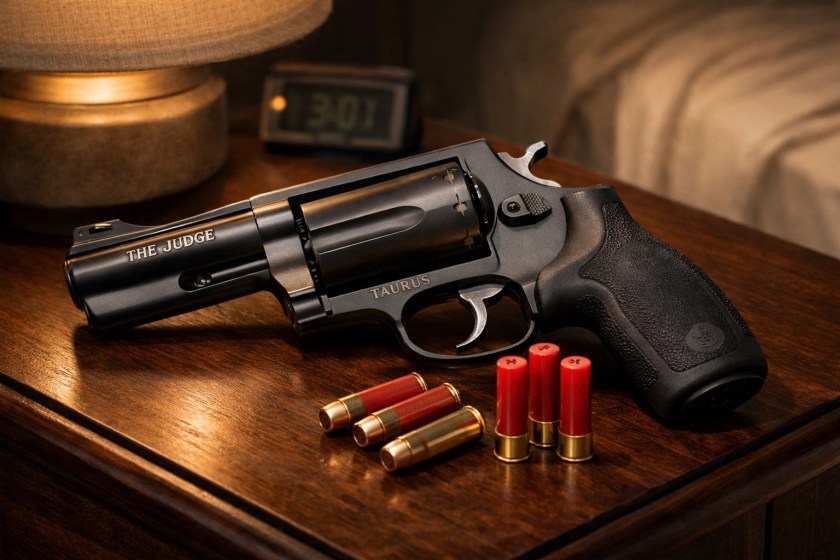
Taurus Judge revolver with .410 shells on nightstand for home defense

Pro tip: Stock up smart and save. We offer a 5% discount on bulk ammo purchases when you buy 10 or more boxes. Plus, if you need to spread out the cost, we've got Sezzle available so you can buy now and pay later. And don't forget: free shipping on all long guns.

So… Is It Worth It?

Here's the bottom line: .410 slugs are worth it if you understand their role.

Buy .410 slugs if:

  • You're introducing someone to shooting/hunting and want minimal recoil
  • You need a lightweight trail gun for small game and varmints
  • You have physical limitations that make larger gauges uncomfortable
  • You own a Judge/Governor and want a defensive load option
  • You appreciate the challenge of getting close and making precise shots

Skip .410 slugs if:

  • You're primarily hunting deer and other medium/large game
  • You want maximum effective range and knockdown power
  • You need one gun to do everything
  • You're not willing to practice and master shot placement

The .410 isn't trying to be a 12-gauge, and that's okay. It's a specialized tool that does certain jobs really well. Respect its limitations, play to its strengths, and you'll find it has a legitimate place in the hunting world.

Want to try it out for yourself? Browse our selection of .410 ammunition and see what works for your needs. And if you're in the market for a .410 shotgun to pair with those slugs, check out our shotgun inventory: we've got options for every budget and purpose.

Happy hunting, and remember: shot placement beats caliber wars every single time.

Ammo Buyer's Guide: Choosing the Right Caliber for Your Firearm

So you just bought your first gun: or maybe your fifth. Either way, congrats! But here's the thing: picking the right ammo is just as important as picking the right firearm. Walk into any gun shop and you'll see walls of boxes with numbers and letters that might as well be a secret code. .223? 5.56? .308? .38 Special? What does it all mean, and more importantly, which one should you buy?

Let me break it down for you the way I wish someone had explained it to me when I was starting out. No confusing ballistics charts or industry jargon: just straight talk about what works, what doesn't, and how to avoid the most common rookie mistakes.

Why Caliber Choice Actually Matters

Think of caliber like picking the right tool for a job. You wouldn't use a screwdriver to hammer in a nail, right? Same deal with ammunition. Using the wrong caliber can mean poor accuracy, wasted money, or even worse: an unsafe situation. Whether you're defending your home, putting rounds downrange at the local range, or heading out for deer season, the caliber you choose will affect everything from recoil to cost to effectiveness.

Let's dig into the most popular calibers and figure out which one fits your needs.

Various ammunition calibers including 9mm, rifle cartridges, and shotgun shells displayed for comparison

The Heavy Hitters: Common Calibers Explained

9mm: The Jack-of-All-Trades

If there's one caliber that does almost everything well, it's 9mm. This is the gold standard for handgun shooters, and for good reason. It's affordable, widely available, and has manageable recoil even for newer shooters. Law enforcement agencies across the country switched to 9mm years ago, and if it's good enough for them, it's good enough for home defense.

Best for: Concealed carry, home defense, range practice
Why it's popular: Low recoil means faster follow-up shots, and you can practice more without breaking the bank. At Wholesale Hunter, we keep 9mm in stock year-round, and don't forget: order 10+ boxes and you'll save 5% automatically.

.223/5.56: The AR-15 Powerhouse

Here's where things get interesting. The .223 Remington and 5.56 NATO look almost identical, but they're not quite the same thing (more on that mistake later). This is your go-to caliber for any AR-15 platform rifle. It's lightweight, accurate out to a few hundred yards, and perfect for everything from varmint hunting to three-gun competitions.

Best for: Tactical shooting, predator hunting, home defense (in a rifle)
Why it's popular: Minimal recoil and high velocity make it incredibly versatile. We stock bulk .223/5.56 ammo in everything from FMJ practice rounds to defensive hollow points.

.308 Winchester: The Long-Range Hunter's Choice

If you're serious about hunting medium to large game: deer, elk, hogs: then .308 Win is your friend. This caliber has been dropping animals cleanly for decades. It's also the civilian version of the 7.62 NATO round used by military snipers, so you know it's got the range and accuracy for serious work.

Best for: Hunting (medium to large game), long-range shooting
Why it's popular: Reliable stopping power and widely available in most hunting rifles. Just know that it's got more recoil than .223, so practice before heading to the field.

.38 Special: The Classic Revolver Round

Don't sleep on the classics. The .38 Special has been around since 1898, and it's still one of the most popular revolver calibers today. It's got moderate recoil, decent stopping power, and it's perfect for anyone who prefers the simplicity and reliability of a wheelgun.

Best for: Home defense, concealed carry (in a snub-nose revolver), range practice
Why it's popular: Affordable and effective. If you're looking for cheap .38 Special ammo or even a used .38 Special revolver to pair with it, we've got you covered. Revolvers don't jam, and that peace of mind is priceless.

Shooter practicing at an outdoor shooting range with proper bench rest technique

.410: The Underdog Making a Comeback

For years, the .410 bore was considered a "beginner's shotgun" caliber: mostly for kids learning to shoot or for taking squirrels in the backyard. But in 2026, it's having a serious resurgence thanks to modern defensive loads like Federal's TSS and Hornady's Critical Defense. With the right ammunition, a .410 can be a legitimate home defense option in a compact, lightweight package.

Best for: Small game hunting, home defense (with the right ammo), truck/camp gun
Why it's popular: Lighter recoil than a 12-gauge, easier to handle, and surprisingly effective with modern slug technology. We stock .410 slugs for sale specifically for hunters and folks looking for a less punishing defensive option.

Use Cases: Matching Caliber to Purpose

Now that you know what's out there, let's talk about when to use each one.

Range Practice

For burning through boxes at the range, you want something affordable and low-recoil. 9mm and .22 LR are your best bets here. You'll go through hundreds of rounds in a single session, so buying in bulk is smart. Remember: order 10+ boxes and save 5% on all our bulk ammo. If you need to spread out the cost, we also offer Sezzle payment plans so you can stock up now and pay over time.

Pro tip: Stick with FMJ (full metal jacket) rounds for the range. They're cheaper and designed for target shooting, not expansion.

Self-Defense

For home defense or concealed carry, you need reliability and stopping power. 9mm, .38 Special, .223/5.56 (in a rifle), and .410 (with slugs) all fit the bill. This is where you want hollow point or defensive rounds: not FMJ. Hollow points expand on impact, which increases stopping power and reduces the risk of over-penetration through walls.

Home defense firearms setup showing handgun, shotgun, and rifle storage options

Hunting

Your caliber choice depends entirely on what you're hunting:

  • Small game (rabbits, squirrels): .22 LR, .410 bore
  • Medium game (deer, hogs): .308 Win, .30-06, 6.5 Creedmoor
  • Varmints (coyotes, prairie dogs): .223/5.56

Each state has different regulations on what calibers are legal for certain game, so always check your local hunting laws before heading out.

Common Mistakes (And How to Avoid Them)

Let's talk about the screw-ups I see way too often:

Mixing Up .223 and 5.56

They look the same, but 5.56 NATO operates at higher pressure than .223 Remington. You can usually shoot .223 in a 5.56 chamber, but firing 5.56 in a .223-only chamber can be dangerous. Check your barrel markings before you load up.

Confusing .380 ACP with 9mm

These are not interchangeable. .380 ACP (also called 9mm Kurz) is shorter and less powerful than 9mm Luger. Trying to chamber the wrong one can lead to jams or worse. Always double-check your ammo before loading.

Using Target Ammo for Defense

FMJ rounds are great for punching paper, but they're designed to pass straight through. For self-defense, you need hollow points that expand and transfer energy. Don't cheap out when your life is on the line.

Buying the Wrong Grain Weight

Not all 9mm (or any caliber) is created equal. Lighter grain bullets (like 115gr) are faster but have less recoil. Heavier bullets (like 147gr) hit harder but kick more. Experiment to see what your gun likes and what you shoot best.

Hunter with rifle in the woods during dawn hunting for medium to large game

Stock Up Smart: Take Advantage of Our Deals

Now that you know what you need, here's how to save while you build your ammo stash:

  • Bulk Discount: Order 10+ boxes of any caliber and automatically save 5% at checkout. Whether you're stocking up on 9mm, .223/5.56, or .38 Special, buying in bulk just makes sense.

  • Sezzle Payment Plans: Need to spread out the cost? Use Sezzle at checkout to break your order into four interest-free payments. Perfect if you're building your first ammo collection.

  • Free Shipping on Long Guns: Buying a rifle to match your new ammo? We offer free shipping on all long guns, so you can get everything delivered right to your FFL without the extra shipping fees.

  • 5% Off Your Next Order: Leave us a review after your purchase and we'll send you a code for 5% off your next order. It's our way of saying thanks for spreading the word.

Final Thoughts

Choosing the right caliber doesn't have to be complicated. Start with your intended use: range practice, self-defense, or hunting: and work backward from there. If you're still not sure, start with 9mm for handguns or .223/5.56 for rifles. You can't go wrong with either one, and you'll have plenty of affordable ammo options to keep you shooting.

Got questions about a specific caliber or need help finding the right ammo for your firearm? Hit us up: we're always happy to help. And don't forget to browse our full selection at Wholesale Hunter to see what's in stock today.

Now get out there and shoot straight. 🎯

Must-Have Kel-Tec PLR-16 Accessories: How to Build the Ultimate Compact Powerhouse

If you own a Kel-Tec PLR-16, you already know what makes it special. This pistol-caliber carbine, wait, scratch that, this 5.56 pistol delivers rifle-level ballistics out of a package that's barely longer than a standard 1911. It's quirky, loud as hell, and has a cult following that rivals any platform on the market.

But here's the thing: the PLR-16 is incredible out of the box, but it's even better when you add a few choice upgrades. Think of it as a blank canvas waiting for your personal touch. Whether you're building a truck gun, a range toy, or a lightweight defensive option, the right accessories can transform this compact powerhouse into exactly what you need.

Let's dig into the must-have upgrades that'll take your PLR-16 from "cool" to "holy crap, is that thing even legal?"

Why the PLR-16 Needs a Little Love

The PLR-16 came to market as Kel-Tec's answer to a question nobody asked: "What if we took a rifle cartridge and crammed it into the smallest, lightest pistol format possible?" The result is a 3.2-pound firearm that punches way above its weight class, literally.

Kel-Tec PLR-16 pistol with aftermarket accessories including optic, muzzle brake, and tactical light

But all that performance comes with trade-offs. The factory setup is bare-bones. No brace. Minimal rails. A muzzle that'll announce your presence to the next county over. It's functional, sure, but it's begging for upgrades. The good news? The aftermarket has your back, and most of these accessories require zero gunsmithing.

Taming the Beast: Muzzle Devices

Let's address the elephant in the room: the PLR-16 is LOUD. We're talking "indoor range RSO giving you the stink-eye" loud. That 9.2-inch barrel doesn't give powder much time to burn, which means you're getting a fireball and a concussive blast that'll rattle your fillings.

A quality muzzle brake or compensator is your first upgrade. The PLR-16 comes threaded 1/2×28, so you've got options. A good brake will redirect gases to reduce felt recoil (which is already mild) and help manage muzzle rise during rapid fire. More importantly, it'll cut down on the flash and make your range neighbors slightly less irritated.

Linear compensators are particularly popular on the PLR-16 because they direct blast forward instead of to the sides. You'll still turn heads, but at least you won't be pepper-spraying the guy in the lane next to you with hot gas.

And while you're shopping muzzle devices, stock up on 5.56 ammo to test out your new setup. Remember, we've got that 5% bulk discount on 10+ boxes, perfect for pattern testing and breaking in your new brake.

Rails and Handguards: Real Estate for Days

The factory forend on the PLR-16 is… minimalist. You get a top rail for optics, and that's about it. If you want to mount a light, laser, or vertical grip, you're out of luck.

Enter the quad rail system. These aftermarket handguards replace the factory forend and give you Picatinny rails at 3, 6, 9, and 12 o'clock positions. Suddenly, your PLR-16 goes from "basic" to "tactical Christmas tree."

PLR-16 muzzle flash and blast at outdoor shooting range demonstrating short barrel concussion

Now, fair warning: quad rails add weight. The PLR-16's whole selling point is being stupid-light, so don't go overboard. Mount what you'll actually use. A compact weapon light at 9 o'clock? Smart. A bipod, three lasers, and a cup holder? Maybe dial it back.

For a cleaner look, M-LOK or KeyMod handguards give you attachment points without the extra bulk. They're lighter, sleeker, and still let you run a light or grip where it matters.

Optics: See Faster, Shoot Better

The PLR-16's flat-top receiver is ready for glass, and trust me, you want an optic on this thing. Between the short sight radius and that massive muzzle blast kicking up debris, iron sights are fighting an uphill battle.

Red dots are the natural choice. Something compact and lightweight like a Holosun, Vortex, or Primary Arms micro red dot won't break the bank or add unnecessary weight. Look for models with a 2-MOA dot, precise enough for 100-yard shots but fast for close work.

If you're feeling fancy, a 1-4x or 1-6x variable optic opens up the PLR-16's potential at distance. That 5.56 round is still cooking along at 2,300+ fps out of the short barrel, which gives you usable accuracy well past 200 yards. A low-power variable gives you flexibility for both close-quarters and precision shots.

Don't forget to grab a Picatinny riser if you're running larger optics. A 1-inch riser helps with cheek weld (especially if you add a brace) and gives you better co-witness with backup iron sights.

Speaking of which, throw on some flip-up BUIS as insurance. Electronics fail. Batteries die. Iron sights are forever.

The Game-Changer: Arm Brace or Stabilizer

Here's where the PLR-16 goes from "interesting range toy" to "legitimate defensive option." Adding an arm brace or stabilizer changes everything about how this gun handles.

A quality pistol brace like the SB Tactical FS1913 folds to the side, keeping the gun compact for storage and transport. When deployed, it gives you a third point of contact that massively improves control and accuracy. You'll cut your group sizes in half, guaranteed.

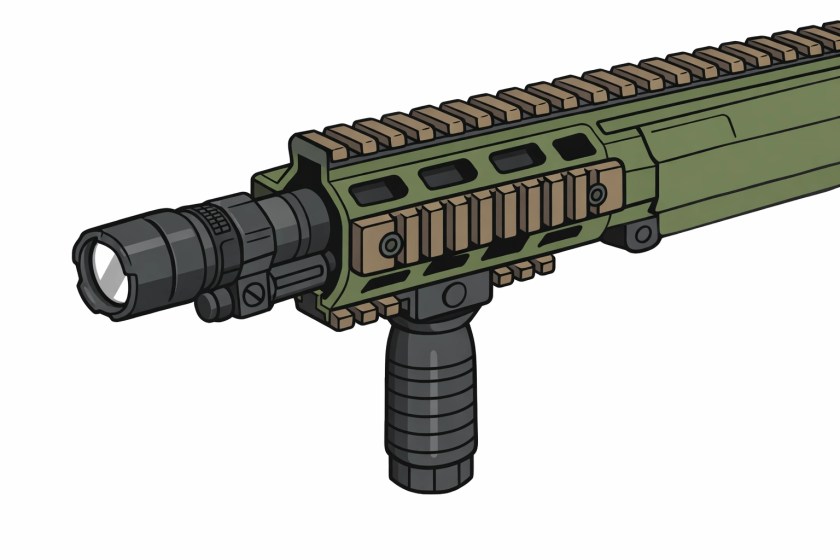
Quad rail handguard system with Picatinny rails, tactical light, and vertical grip mounted

Installation is straightforward, most braces use a Picatinny adapter that attaches to the rear of the receiver. No permanent modifications required. And yes, it's still legally a pistol (assuming you follow all the current ATF rules, which we recommend keeping up with because… well, you know).

The difference in shootability is night and day. Suddenly, that 100-yard steel plate isn't a challenge, it's a gimme.

Sling It: Stabilization and Carry

Even with a brace, a sling is borderline mandatory on the PLR-16. This thing is front-heavy with a loaded magazine, and trying to shoot it one-handed gets old fast.

A single-point sling works great for dynamic shooting and transitions. It keeps the gun tight to your body but gives you freedom of movement. For carry and general-purpose use, a two-point sling distributes weight better and keeps the PLR-16 secure during movement.

Most braces and rail systems include QD (quick-detach) sling points, which makes swapping between setups a breeze. Mount your rear QD point on the brace and your forward point on the handguard, and you're good to go.

Don't Forget the Charging Handle

Okay, this one's subtle, but if you're running the PLR-16 hard, an upgraded charging handle makes a difference. The factory handle works fine, but aftermarket versions offer more surface area and better texture. When you're wearing gloves or running the gun in competition, that extra grip matters.

It's a small upgrade, but it's the little things that separate a smoothly-running setup from one that fights you.

Feeding Your Build: Ammo Considerations

All these upgrades won't mean much if you're not putting rounds downrange. The PLR-16 eats both .223 and 5.56, but it prefers the latter, that higher-pressure round really shines out of the short barrel.

Check out our Kel-Tec products and stock up on ammo while you're building your setup. With our 5% discount on bulk orders (10+ boxes), you can afford to actually shoot your build instead of just admiring it.

And hey, if you're spreading out the cost of building your ultimate PLR-16, remember we offer Sezzle at checkout. Break up your purchase into manageable payments and get back to the range faster.

Putting It All Together

The beauty of the PLR-16 is that it's whatever you want it to be. A minimalist truck gun? Keep it simple with just a red dot and sling. A tricked-out range blaster? Go full tilt with the quad rail, variable optic, brace, and muzzle brake.

Start with the essentials: muzzle device, optic, and brace: then build from there based on how you actually use the gun. Don't fall into the trap of adding weight just because you can. The PLR-16's charm is in its compactness and agility.

Once you've got your setup dialed in, leave us a review and snag that 5% reward on your next order. We love hearing how you're running your builds.

The Kel-Tec PLR-16 is proof that weird can work. With the right accessories, this oddball pistol becomes a legitimate performer that punches well above its size class. Whether you're building for fun or function, the aftermarket's got you covered: and Wholesale Hunter has everything you need to make it happen.

Now get out there and build something cool.


Completed the task
task="Daily Blog Draft Ready by 8 AM CST"
id="471f50a8-a97a-4fff-925e-3c27ea76cb59"

TSS vs. Lead: Is the High-End Turkey Ammo Really Worth the Price?

If you've been browsing turkey loads lately, you've probably had a mini heart attack looking at TSS (Tungsten Super Shot) prices. When you're staring at shells that cost $15-20 each compared to traditional lead loads at around $2, it's natural to wonder if someone made a typo. Spoiler alert: they didn't.

So let's cut through the marketing hype and figure out if TSS is actually worth the sticker shock, or if it's just another way for ammo companies to separate you from your hard-earned cash.

The Basic Difference: It's All About Density

Here's the science part, but I promise to keep it simple. TSS is made from tungsten, which is dense. Like, really dense. We're talking 18 grams per cubic centimeter compared to lead's 11.3 g/cc.

Why does that matter? Because denser pellets carry more energy downrange and punch harder when they get there. A tiny No. 7 or 8 TSS pellet hits with the same authority as a much larger No. 4 lead pellet. That means you can use smaller shot sizes, pack more pellets into each shell, and still deliver devastating patterns at distances that would make traditional lead loads cry uncle.

Think of it this way: TSS is the overachiever that shows up smaller but punches way above its weight class.

TSS vs lead turkey shot pellets size comparison showing tungsten density advantage

Why TSS Changed the Game for Smaller Gauges

Remember when everyone said you needed a 12-gauge for serious turkey hunting? TSS threw that conventional wisdom out the window. Suddenly, guys are dropping longbeards at 40+ yards with .410 shotguns that their grandfathers would've only used for squirrels.

The secret is pattern density. Because TSS pellets are so much heavier for their size, you can load hundreds more into a shell. A .410 TSS load might have more effective pellets in a turkey's vitals at 40 yards than a 12-gauge lead load. That's not marketing spin, that's just physics doing its thing.

This opens up some interesting possibilities. Want less recoil? Grab a 20-gauge. Need something ultralight for hiking miles into public land? A .410 with TSS suddenly becomes a legitimate option instead of a novelty.

The Patterning Difference You Can Actually See

Here's where TSS really flexes. At 50 yards, quality TSS loads show about 35% more penetration in ballistics gel compared to lead. But the real eye-opener is how it performs at extended range.

Testing shows that at 45 yards, #7 TSS delivers around 490 lb-ft/in² of penetration energy versus just 212 lb-ft/in² for #5 lead shot. That's not a small difference, that's the difference between a clean kill and a wounded bird heading for the next county.

Plus, TSS's consistent density means you can run more open chokes. That might sound backwards, but it makes sense: you don't need a super-tight choke to get killing patterns at reasonable distances, which reduces your chances of completely missing a bird that comes in close.

Hunter with .410 shotgun and turkey decoy in fall woods demonstrating smaller gauge hunting

The Cost Reality Check

Let's address the elephant in the room: TSS is expensive. Like, really expensive. You're looking at anywhere from $15-25 per shell depending on the load. Meanwhile, you can grab a box of quality lead turkey loads for $15-20 total.

But here's the thing, how many shells do you actually shoot at turkeys each season? If you're like most hunters, you might fire 2-3 rounds total if it's a good year. One to pattern, maybe a follow-up shot if you're having a rough morning. At that rate, even a full box of TSS shells will last you several seasons.

Lead still has its place, though. If you're heading to the range to pattern different loads or practice your swing on clay targets, use lead. No point burning through $20 shells for practice. Save the TSS for the real deal.

And here's a pro tip: at Wholesale Hunter, we offer 5% off when you buy 10+ boxes of any ammo, yes, including those premium turkey loads. Stock up with your hunting buddies and split the order. Suddenly that TSS doesn't sting quite as much.

The "One and Done" Philosophy

Here's where TSS advocates make their strongest case. That $20 shell is expensive until you consider what it's buying you: confidence.

With lead, you're playing it safe, keeping shots inside 35 yards, second-guessing your distance estimation. With TSS, you've got a much bigger margin for error. Bird at 45 yards in thick brush? With a quality TSS load, you can take that shot knowing you've got the penetration and pattern density to close the deal.

Think of it as insurance. That extra $15 per shell might mean the difference between tagging out on opening morning versus eating your tag in late May. When you drove three hours to get to your spot, took a vacation day, and got up at 4 AM, is saving $15 on ammo really the hill you want to die on?

Turkey hunting target showing TSS tight pattern vs lead spread at shooting range

When Lead Still Makes Perfect Sense

Let's be real: TSS isn't always necessary. If you're consistently killing birds inside 30 yards, traditional lead loads will do the job just fine. Both TSS #10 and lead #6 shot lose their effectiveness around the 40-yard mark anyway, so there's a ceiling to the advantage.

Hunters who are disciplined about calling birds in close, who hunt tight woods where long shots aren't even possible, or who simply enjoy the challenge of getting within spitting distance of a tom, you guys can save your money. Lead works perfectly well when you do your part.

Also, if you're new to turkey hunting and still figuring out the whole calling, setup, and patience thing, start with lead. Learn the fundamentals, pattern your gun with affordable ammo, and get a few birds under your belt before you decide if the TSS upgrade makes sense for your style.

Breaking Up the Cost with Payment Options

Even if you've decided TSS is worth it, dropping $200+ on a few boxes of shells can be tough to swallow all at once. That's where Sezzle comes in handy.

You can split your purchase into four interest-free payments, which makes stocking up on premium turkey loads (or finally grabbing that new turkey gun you've been eyeing) a lot easier on the wallet. Get what you need now, pay over time, and head into spring with confidence.

The Bottom Line: Who Should Buy TSS?

After all this, here's my honest take on who benefits most from TSS:

Go with TSS if you:

  • Hunt pressured public land where turkeys are wary and long shots are common
  • Want to use a smaller gauge for less weight/recoil
  • Value the extra margin for error in the field
  • Have the budget and shoot 5 shells or fewer per season
  • Hunt in states where shooting hours or seasons are limited (make every shot count)

Stick with lead if you:

  • Consistently kill birds inside 30 yards
  • Are still learning turkey hunting basics
  • Shoot multiple boxes per season for practice
  • Hunt tight cover where shots are always close
  • Want to save money for other gear upgrades

Spring turkey hunting scene with camouflaged hunter waiting for strutting tom at dawn

Maximize Your Ammo Budget

Whether you go TSS or stick with lead, here are a few ways to stretch your dollar at Wholesale Hunter:

  1. Buy in bulk – Remember that 5% discount on 10+ boxes? Coordinate with your hunting crew and stock up together.

  2. Pattern before the season – Use cheaper lead loads to dial in your setup, then confirm with 1-2 TSS shells before opening day.

  3. Leave a review – After your purchase, drop a quick review and we'll hook you up with 5% off your next order. That adds up fast.

  4. Consider a new gun – If you're thinking about downsizing to a 20-gauge or .410 to shoot TSS, we offer free shipping on all long guns. Browse our selection of shotguns under $300 or check out our full turkey hunting gear lineup.

Final Thoughts

Is TSS worth the price? For most serious turkey hunters, yes: but with caveats. It's not magic fairy dust that turns you into a turkey-slaying machine, but it does provide a legitimate performance advantage at moderate to long range.

The real question isn't whether TSS works better (it objectively does), but whether that performance gain matters for your hunting style and budget. A hunter who calls birds to 20 yards doesn't need $20 shells. A hunter chasing pressured gobblers on public land that hang up at 45 yards? That's a different story.

At the end of the day, the best ammo is the one that gives you confidence when that tom steps into the opening. Whether that's a $2 lead load or a $20 TSS shell, make the choice that fits your situation.

Now get out there and pattern your gun. Spring's coming faster than you think.

Ready to stock up on turkey loads? Check out our full selection of bulk ammunition and don't forget: 10+ boxes gets you 5% off automatically at checkout.

Tree Stand Safety 101: How to Replace Ol' Man Climbing Stand Cables (Easy Guide for Hunters)

Look, I'm not here to lecture you, but let's get real for a second, tree stand accidents are no joke. Every hunting season, we hear about someone who got hurt because their equipment failed. And more often than not? It's something that could've been prevented with a little maintenance.

If you've been running an Ol' Man climbing stand for a few seasons (or maybe you picked one up used), those cables deserve your attention. They're literally the thing keeping you from taking an unplanned trip to the ground. The good news? Replacing them is easier than you think, and it'll cost you way less than a trip to the ER.

Why Cable Maintenance Actually Matters

Here's the deal: climbing stand cables take a beating. They're constantly flexing, bearing your weight, rubbing against tree bark, and dealing with whatever Mother Nature throws at them, rain, snow, UV rays, the works. Over time, even the best cables will start to show their age.

I've seen guys who are meticulous about cleaning their rifles and maintaining their bows completely ignore their tree stand cables. That's backwards thinking, my friend. Your stand is the platform you're literally trusting with your life every time you climb 20 feet up a tree.

Regular cable inspection and replacement isn't just about avoiding a fall (though that's obviously priority number one). It's also about peace of mind. When you know your gear is solid, you can focus on what matters, hunting.

Hunter inspecting frayed tree stand cable for safety damage and wear

Red Flags: Signs Your Cables Need Replacing

Before we get into the how-to, let's talk about what to look for. You should be inspecting your cables before every season, at minimum. Here's what screams "replace me":

Fraying or broken strands – This is the big one. If you see individual wire strands poking out or breaking free from the cable, you're done. Don't even think about using that stand again until you replace them.

Rust or corrosion – Surface rust might not be the end of the world, but deep corrosion or pitting? That's compromising the cable's strength. Not worth the gamble.

Cracked or damaged coating – Most modern cables have a protective coating (usually rubber or vinyl). If that coating is cracked, peeling, or missing in spots, moisture is getting in and doing damage you can't see.

Kinks or odd bends – Cables should have smooth, consistent curves. If you see any weird kinks, sharp bends, or flat spots, the cable's been damaged and its integrity is questionable.

Age – Even if your cables look okay, if they're more than 3-5 years old and you use your stand regularly, consider replacing them as a precaution. Cables are cheap. Your safety isn't.

What You'll Need

The actual replacement process is pretty straightforward, but you'll want to gather your supplies first:

  • Replacement cables (sized correctly for your specific Ol' Man model)
  • Socket set or adjustable wrench
  • Measuring tape
  • New hardware (bolts, nuts, washers, and nylock nuts, you might need these if your replacement cables use different-sized hardware than your originals)
  • Work gloves (optional but recommended)
  • Penetrating oil (like WD-40, in case your bolts are stubborn)

Most replacement cable sets run between $18-25, which is a steal compared to buying a whole new stand. You can find quality options that feature coated steel construction with rubber or shrink tubing to eliminate noise and metal-to-metal contact.

Tree stand cable replacement tools including wrench, cables, and hardware on workbench

The Step-by-Step Process

Alright, let's get those cables swapped out. Take your time with this: there's no prize for speed.

Step 1: Measure Your Current Cables

Before you even order replacement cables, measure your existing ones from eyelet to eyelet (or connection point to connection point). Most manufacturers sell cables in specific lengths, and you need to get this right. Write it down: don't trust your memory.

Step 2: Check Your Hardware Size

Here's something that trips people up: some replacement cables come with different-sized hardware than what was originally on your stand. For example, newer cables might use 1/4" bolts while your older Ol' Man stand might have 5/16" holes. Check this before you start, and if needed, grab the right-sized bolts, washers, and nylock nuts from your local hardware store. Seriously, this costs like five bucks and saves a ton of headaches.

Step 3: Secure Your Stand

Work on the stand while it's on solid ground: not mounted on a tree. Lay it out in your garage or driveway where you've got good light and plenty of space.

Step 4: Remove the Old Cable (One Side at a Time)

Using your socket set or wrench, loosen the nut and bolt on one side of the cable attachment point. I always do one cable at a time so I can reference the other side if I forget how something goes together. Slide out the old cable, paying attention to how any washers or spacers are positioned.

Step 5: Install the New Cable

Feed the new cable through the attachment point, making sure you've got any washers or spacers in the right order. This matters for even weight distribution. Thread the bolt through, add your washer and nut, but don't fully tighten it yet: just snug it up.

Step 6: Repeat for the Second Cable

Same process on the other side. Take your time and make sure everything lines up correctly.

Step 7: Final Tightening

Once both cables are in place, go back and tighten all the hardware securely. You want it tight, but don't go Hulk-mode and strip the threads. Use nylock nuts if possible: they resist loosening from vibration.

Step 8: Inspect Your Work

Double-check everything. Tug on the cables. Make sure all hardware is tight. Verify that nothing's binding or rubbing in weird places. This is your life we're talking about: be thorough.

Installing new climbing stand cable through attachment point with bolt and washer

Don't Forget Your Safety Harness

While we're on the subject of tree stand safety, let's talk about the other critical piece of equipment: your safety harness. I don't care if you've been hunting for 40 years or you're "really careful": wear your harness. Every. Single. Time.

A good harness isn't just insurance against a cable failure. It's your backup for that moment when you lose your balance, your boot slips on wet bark, or you doze off after sitting still for three hours (we've all been there).

At Wholesale Hunter, we carry quality harnesses that won't break the bank. And if budget's tight, remember we offer Sezzle payment options: you can split the cost into manageable chunks rather than gambling with your safety because you're waiting on payday.

When Replacement Isn't Enough

Sometimes cables aren't the only issue. If your stand's platform is cracked, welds are failing, or you're seeing rust throughout the frame, it might be time to upgrade rather than repair. The math is simple: cables cost $20-25 to replace, but if your stand has multiple problems, you're better off investing in new equipment.

We've got a solid selection of hunting gear that'll keep you safe and comfortable in the stand. And here's a pro tip: when you buy something from us and leave a review, you'll get 5% back through our review reward program. That adds up, especially when you're kitting out for the season.

The Bottom Line

Replacing your Ol' Man climbing stand cables is one of those maintenance tasks that seems intimidating until you actually do it: then you wonder why you put it off so long. It's a one-afternoon project that could literally save your life.

Don't be the guy who says "I'll do it next week" until next week turns into next season. If you've got any doubts about your cables, replace them now. They're cheap, the job's easy, and you'll sleep better knowing your equipment is solid.

Stay safe out there, and remember: the best hunt is the one you walk away from in one piece.

Got questions about tree stand safety or need gear recommendations? Drop us a line. We're hunters helping hunters: that's what we do.

Completed the task
task="Daily Blog Draft Ready by 8 AM CST"
id="cb00b58f-bf1f-470d-8677-d48b97baec04"

Colt Thunderer Replicas vs. Original Models: Which Is Better For Your Collection?

Picture this: you're standing in a dusty frontier town circa 1885, and the local sheriff walks by with a Colt Thunderer on his hip. That double-action beauty in .41 Colt was the real deal back then, fast on the draw, smooth as butter, and packing enough punch to settle disagreements the old-fashioned way.

Fast forward to 2026, and collectors are still obsessed with these legendary wheelguns. But here's the million-dollar question (or maybe the few-hundred-dollar question): should you hunt down an original Colt Model 1877 Thunderer, or grab one of the modern replicas that won't break the bank, or break down on you at the range?

Let's talk about it.

Why the Thunderer Was a Frontier Favorite

The Colt Model 1877 "Thunderer" wasn't just another revolver. It was Colt's first double-action handgun, which was a pretty big deal back in the late 1800s. Before the Thunderer, you had to manually cock the hammer every single time you wanted to fire. The double-action mechanism meant you could just keep pulling the trigger for faster follow-up shots.

The Thunderer chambered the .41 Colt cartridge (not to be confused with the modern .41 Magnum), while its slightly smaller sibling, the Lightning, used .38 Colt. Cowboys, lawmen, and even some outlaws carried these guns because they were relatively quick to deploy and had enough stopping power for the dangerous work of taming the West.

Antique Colt Thunderer revolver from the 1880s on wooden saloon table

Between 1877 and 1909, Colt produced roughly 166,000 Lightning and Thunderer revolvers combined. They were popular, no doubt about it. But as we'll get into in a minute, popularity doesn't always equal reliability, especially by modern standards.

The Case for Original Colt Thunderers

They've Got Soul (and History)

There's something almost magical about holding a piece of genuine frontier history. An original Thunderer might've been carried through cattle drives, saloon brawls, or even the occasional shootout. You're not just buying a gun, you're buying a time capsule.

For serious collectors, authenticity is everything. Original 1877s have provenance, character, and often unique markings that tell their own stories. If you're the type who gets goosebumps thinking about Wyatt Earp or Doc Holliday, an original Thunderer belongs on your shelf.

Investment Potential

Quality antique firearms have historically been solid investments, and original Thunderers in good condition can command serious money at auctions. If you can find one with documented history or in exceptional shape, it could appreciate nicely over time.

The Reality Check

Here's where things get tricky: original Thunderers are notoriously fragile. The double-action mechanism was complex for its time, maybe too complex. These guns are famous for breaking springs, having timing issues, and generally being a headache to keep running.

Finding replacement parts? Good luck. Modern reproduction parts often don't fit properly, and the intricate internal lockwork requires a specialized gunsmith who actually knows what they're doing. Most gunsmiths today would rather work on modern firearms than wrestle with 140-year-old technology.

The bottom line: if you find an original Thunderer in decent mechanical condition, it's a rare bird. And if you plan to actually shoot it, you're playing with fire. These aren't range guns, they're safe queens.

The Case for Modern Replicas

You Can Actually Shoot Them

This is the big one, folks. Modern replicas from companies like Uberti and Pietta are built to be used. They're made with modern metallurgy, better quality control, and they're designed to handle modern ammunition safely.

Original Colt Thunderer vs modern replica revolver comparison

Most Thunderer replicas chamber either .45 Colt or .38 Special, both of which are widely available and affordable compared to sourcing original .41 Colt ammunition. Speaking of which, we've got some killer deals on .38 Special bulk ammo right now. Grab 10+ boxes and you'll save an extra 5% off your order. Perfect for feeding your new replica at the range without going broke.

Way More Affordable

Let's be real: not everyone has $2,000+ to drop on an antique firearm that might not even function properly. Quality replicas typically run anywhere from $400 to $800 depending on the model and finish, a fraction of what you'd pay for an original in similar condition.

And if even that feels steep? We offer Sezzle at checkout, so you can break that payment into smaller, interest-free installments. Makes it way easier to scratch that cowboy action itch without draining your checking account all at once.

Modern Reliability

Let's not sugarcoat it: the original 1877 design had issues. Modern replica manufacturers have learned from those mistakes. While some replicas (like certain Pedersoli models) are single-action only, which admittedly loses some of the original's charm, there are also improved double-action versions available that function far more reliably than the originals ever did.

You won't be constantly hunting down obscure parts or praying your gun doesn't break mid-competition at a Cowboy Action Shooting event.

The Compromise

Here's the catch: modern replicas aren't exactly like the originals. Some are single-action conversions that sacrifice the original's double-action mechanism. Others have slight dimensional differences or modern safety features that purists might find off-putting.

If absolute historical accuracy is your thing, replicas will always fall a bit short. But if you want something you can take to the range, enjoy shooting, and maybe even compete with, a replica is the smarter choice.

Cowboy action shooter firing Colt Thunderer replica at outdoor shooting range

So Which Should You Choose?

You're a Collector

If you're building a historically accurate collection and authenticity matters more than function, go for the original. Just know what you're getting into: higher prices, potential mechanical issues, and the fact that shooting it regularly is probably a bad idea.

Make sure you're buying from a reputable dealer and getting documentation if possible. Condition is everything with antique firearms, so budget accordingly.

You're a Shooter

If you want to actually use your Thunderer, whether for Cowboy Action Shooting, casual plinking, or just enjoying that Old West vibe at the range, get a quality replica. You'll save money, avoid headaches, and actually be able to shoot the thing without worrying about destroying a piece of history.

Check out our selection of Cowboy Action-style firearms and pair it with some .45 Colt ammo for the full experience. Remember, 10+ boxes of ammo gets you 5% off your order, perfect for a full day at the range.

You Want Both Worlds

Hey, nobody says you can't have both! Start with a quality replica to shoot and enjoy, and keep your eyes peeled for an original in good condition to add to your collection down the road. That way you get the best of both worlds: a functional shooter and a genuine piece of frontier history.

Final Thoughts

The Colt Thunderer: whether original or replica: represents a fascinating chapter in American firearms history. Originals offer unmatched authenticity and investment potential but come with mechanical baggage. Replicas give you reliability, shootability, and affordability without the stress of babying a fragile antique.

At the end of the day, it comes down to what matters more to you: owning a genuine piece of the Old West, or actually getting out there and shooting like a cowboy?

Whatever you decide, make sure you stock up on ammo while our bulk deals are running, and don't forget: leave a review on your next purchase and get 5% off your following order. We love hearing from you guys, and honestly, it helps other folks make smarter buying decisions too.

Now get out there and channel your inner gunslinger. 🤠

Completed the task
task="Daily Blog Draft Ready by 8 AM CST"
id="3c11b442-2c7c-484f-b98d-5bd2e8bd8ae4"