The Ultimate Guide to .410 Slugs: Everything You Need to Succeed

Hey there, fellow hunters and shooters! Jason Marsh here from Wholesale Hunter. If you’ve spent any time in the woods or at the range, you’ve probably heard some folks dismiss the .410 as a "kid’s gun." Well, I’m here to tell you that when you start talking about .410 slugs, that reputation is a bit unfair.

Whether you are looking for a low-recoil option for home defense, a lightweight survival tool, or a challenging way to take down a whitetail, the .410 slug is a fascinating piece of ballistics. But, to be successful with it, you need to understand its limitations and its strengths. It isn't a 12-gauge, and it doesn't try to be.

In this guide, we’re going to dive deep into the world of .410 slugs: covering everything from bore size to the best chokes and why you should definitely check out our 410 slugs for sale before your next trip to the field.

The .410: Is It a Gauge or a Bore?

Let’s start with a little trivia that might win you a bet at the hunting camp. Most shotguns are classified by "gauge": 12-gauge, 20-gauge, etc. This refers to the number of lead balls the size of the barrel's diameter it takes to weigh one pound. If the .410 followed that rule, it would actually be around a 67 or 68 gauge.

Instead, the .410 is measured by its "bore" or caliber. It has a .410-inch diameter. This small diameter is why the .410 is often grouped with sub-gauge shotguns, but its performance with a slug is surprisingly similar to some famous handgun rounds. While many of our customers come to us looking for cheap 38 special for target practice, they are often surprised to find that a .410 slug actually packs more punch than a standard .38 Special round.

Wholesale Hunter Logo

Understanding .410 Slug Ballistics

When you swap out birdshot for a slug, you are essentially turning your shotgun into a short-range rifle. But how does the math actually work out for such a small projectile?

Most .410 slugs weigh between 1/4 ounce and 1/5 ounce. In rifle terms, that’s about 87 to 109 grains. For comparison, a standard 12-gauge slug is a massive 437 grains (1 ounce). However, the .410 makes up for its lack of mass with some serious speed.

  • Muzzle Velocity: Most .410 slugs fly at about 1,750 to 1,830 feet per second (fps).
  • Muzzle Energy: You’re looking at roughly 650 to 750 foot-pounds of energy.

To put that into perspective, that is roughly the same energy profile as a .357 Magnum fired from a handgun. That’s plenty of power for home defense and more than enough to take down a deer or a coyote if your shot placement is on point. If you want to see what we have in stock, check out the Remington Slugger .410 Slugs for a classic high-velocity option.

Macro shot of .410 bore slugs for sale featuring rifled lead noses and red plastic hulls.

Types of .410 Slugs: Foster vs. Brenneke vs. Sabot

Not all slugs are created equal. Depending on your shotgun setup and your target, you’ll need to choose the right "flavor" of lead.

1. Foster Slugs (Rifled Slugs)

These are the most common slugs you’ll find. They have a hollow base and "rifling" grooves on the outside. These grooves aren't actually there to make the slug spin like a rifle bullet; they are there to allow the slug to compress safely if it has to pass through a tight choke. They are soft and deform easily upon impact.

2. Brenneke Slugs

If you are serious about deer hunting with a .410, you want a Brenneke. These are solid lead projectiles with a plastic or felt wad attached to the base that stays with the slug during flight. This stabilizes the slug and provides much deeper penetration than a Foster slug. Because they don't deform as easily, they are much better at punching through bone to reach vitals.

3. Sabot Slugs

These are meant specifically for rifled barrels. The slug sits inside a plastic sleeve (the sabot). When fired, the rifling in the barrel spins the sabot, which in turn spins the slug. Once it leaves the barrel, the plastic sleeve falls away, and the slug continues to its target with much higher accuracy at longer distances.

Choosing the Right Gear: Shotguns and Chokes

To get the most out of your slugs, your hardware needs to match your software.

The Barrel and Choke

Most .410 shotguns are smoothbore. For these, you should stick to Foster or Brenneke rifled slugs. If you have a rare rifled .410 barrel, sabot slugs are your best friend.

One of the biggest mistakes people make with .410 slugs is using the wrong choke. Many older .410s have a fixed "Full" choke. While you can fire a Foster slug through a full choke (because the slug is designed to compress), it usually kills your accuracy. For the best results, you want a Cylinder or Improved Cylinder choke. This allows the slug to exit the barrel without being squished, leading to much tighter groups.

If you're in the market for a dedicated slug gun on a budget, check out our selection of budget shotguns, including models like the Rock Island Armory Tuffy. It’s a simple, reliable platform that works great for slug shooting.

Accessories and Optics

Because the .410 slug has a limited range (usually 50–75 yards for hunting), you don't need a massive sniper scope. A simple red dot or low-power variable optic (LPVO) can make a huge difference in your confidence. Just like we see people tricking out their rifles with kel tec plr 16 accessories, adding a rail and a solid optic to your shotgun can turn it into a precision tool.

Lightweight .410 shotgun with a red dot sight accessory for precise shooting and hunting.

Hunting with .410 Slugs: The Ethical Approach

I’ll be honest with you: hunting deer with a .410 slug requires discipline. You don't have the "shock and awe" energy of a 12-gauge to compensate for a bad shot.

  1. Know Your Distance: For most hunters, 50 yards is the maximum ethical distance. Beyond that, the light slug loses velocity quickly, and the drop becomes significant.
  2. Wait for the Perfect Shot: You need a broadside, double-lung, or heart shot. Avoid quartering-to shots where you have to punch through heavy shoulder bones, especially if you are using Foster slugs.
  3. Practice, Practice, Practice: Since .410 slugs can be a bit finicky depending on your barrel’s bore diameter, you need to "slug your barrel" (test different brands) to see what groups the best.

Home Defense and Survival

While it might not be the first choice for a tactical entry team, the .410 slug is a viable home defense option for those who are recoil-sensitive. A .410 slug has significantly less kick than a 20-gauge or 12-gauge, allowing for faster follow-up shots.

We carry options like the Winchester PDX1 Defender .410, which combines a slug with plating to offer a "best of both worlds" defensive load. In a survival situation, the .410 is king because the ammo is lightweight and the firearms: like many "survival rifles" that are chambered in .410/.45 Colt: are easy to carry.
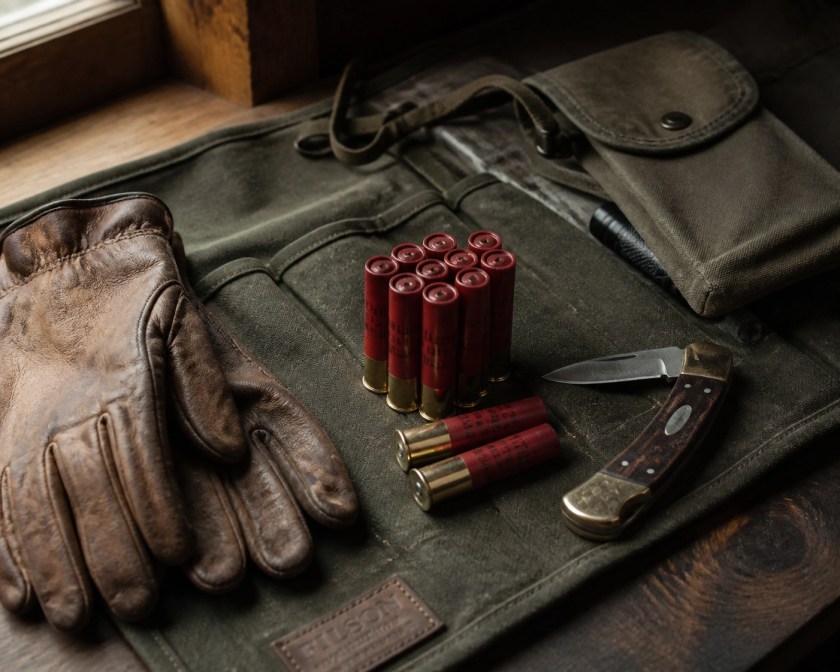
Survival hunting kit featuring .410 slug shells, leather gloves, and a folding knife on canvas.

Accuracy Troubleshooting: Why Is My Grouping Bad?

If you’re at the range and your slugs are "keyholing" (hitting the paper sideways) or won't stay in a 6-inch circle at 25 yards, here’s what to check:

  • The Choke: Again, if you're using a Full choke, try switching to a Cylinder bore if your shotgun has interchangeable chokes.
  • Ammo Brand: Different manufacturers use slightly different alloys and diameters. If Remington Sluggers aren't working for you, try the Winchester Super-X.
  • Cleanliness: Plastic buildup from wads can ruin accuracy over time. Give that bore a good scrub.

Final Thoughts

The .410 slug is a specialized tool that rewards the shooter who takes the time to understand it. It’s a low-recoil, high-velocity projectile that can punch way above its weight class if handled with respect and precision.

Whether you're looking for budget shotguns to start a new hobby or you're stocking up on ammo, we’ve got you covered here at Wholesale Hunter. We pride ourselves on offering expert gear advice and the best prices on everything from 410 slugs for sale to tactical accessories.

Stay safe out there, keep your powder dry, and we'll see you at the range!

  • Jason Marsh
    Owner, Wholesale Hunter

9mm Vs 5.56 NATO: Which Is Better For Your Survival Bug-Out Bag?

Hey there, fellow hunters and preppers! Jason Marsh here from Wholesale Hunter. If you’ve spent any time in the survival community, you know there’s one debate that never seems to die: "What should I pack in my bug-out bag?" Usually, that conversation dives head-first into the great caliber debate. Today, we’re looking at the two heavyweights: 9mm and 5.56 NATO.

Whether you're planning for a natural disaster or a total "SHTF" (Stuff Hits The Fan) scenario, your choice of caliber dictates more than just how much "oomph" you have; it dictates how far you can travel, how much weight you're hauling, and how well you can protect your family. Let’s break down which of these rounds deserves a spot in your pack.

The Weight Factor: Ounces Equal Pounds

When you’re "bugging out," you aren’t just driving to the range with a trunk full of gear. You’re likely on foot, or at least preparing for the possibility that your vehicle might become a 4,000-pound paperweight. In this world, ounces equal pounds, and pounds equal pain.

The 9mm Luger is the undisputed king of weight efficiency here. You can pack hundreds of rounds of 9mm ammo into a small space without feeling like you’re carrying a backpack full of bricks. On average, 500 rounds of 9mm weighs about 13 to 15 pounds. In contrast, 500 rounds of 5.56 NATO will tip the scales closer to 15-18 pounds depending on the grain.

Now, a couple of pounds might not seem like much when you’re standing in your living room, but try hiking ten miles uphill with it. That extra weight could have been an extra three days of food or a better medical kit.

Tactical tan bug-out bag packed with boxes of 9mm and 5.56 ammunition and survival gear on a wooden table.

Stopping Power vs. Effective Range

This is where the debate gets spicy. If you’re carrying a 9mm, you’re likely carrying a handgun or a Pistol Caliber Carbine (PCC). These are fantastic for close-quarters defense. If someone is 25 yards away and trying to do you harm, a solid 9mm like the Glock 19 Gen 5 is more than enough to handle the job.

However, survival isn't always about a shootout in an alleyway. Sometimes it’s about deterrence at a distance or even putting food on the table. This is where 5.56 NATO ammo shines. The 5.56 is a high-velocity rifle round designed to be effective out to 300 yards and beyond. If you see a threat coming from across a field, the 9mm is basically a paperweight, while the 5.56 gives you the reach to keep that threat far away.

Also, don't forget hunting. While neither is a "deer round" by traditional standards, a 5.56 rifle can take down small to medium game much more reliably than a 9mm handgun can.

The Platform: Handgun vs. Rifle

Your choice of caliber also dictates your firearm. A bug-out bag needs to be discrete. Carrying a full-sized AR-15 might make you a target or cause unnecessary panic in a semi-civilized evacuation.

If you go the 9mm route, you can carry a compact handgun and even a folding PCC like the Kel-Tec SUB2000. These can both fit inside your bag.

If you prefer the power of the rifle round but need it to stay compact, you might look at something like the Kel-Tec PLR-16 5.56 Pistol. It gives you rifle power in a much smaller package. And hey, if you already own one, don't forget to stock up on Kel Tec PLR 16 accessories to make it as ergonomic as possible for a long trek.

Compact 9mm handgun and folded survival carbine showing space-saving storage for emergency preparedness.

Logistics: The "Commonality" Rule

In a long-term survival situation, you might run out of what you brought. This is where the 9mm and 5.56 NATO both win over more "exotic" calibers. They are the two most common rounds in the United States. If you stumble upon a deserted hardware store or have to trade with another survivor, you’re much more likely to find 9mm or 5.56 than you are to find .357 SIG or .300 Blackout.

That said, I always tell people to keep a "plan B" in their home stash. For example, having a small revolver and some cheap .38 Special on hand is a great backup. It’s a simple, reliable system that anyone in the family can use if the main bug-out rifle goes down.

Versatility and Multi-Use

When we talk about bug-out bags, we usually focus on defense. But real survival is about staying fed and staying safe. While the 5.56 is more versatile for hunting, some people prefer a "multi-gun" approach.

I’ve seen guys pack a 9mm sidearm for defense and a small, lightweight shotgun for utility. If you’re looking at budget shotguns for your bag, a compact .410 can be a lifesaver. You can find 410 slugs for sale that turn a tiny squirrel gun into something capable of taking down a larger predator if things get hairy.

However, for most of us, carrying two or three different types of ammo is just too much weight. This is why the "caliber consolidation" rule is so popular: pick one and stick to it.

Tactical pouch with 9mm ammunition and red shotgun shells for wilderness survival in a forest setting.

The Case for the 9mm Bug-Out Bag

Pros:

  • Ammo Weight: You can carry a lot more.
  • Concealment: Handguns are easy to hide.
  • Ease of Use: Lower recoil, especially in a PCC.
  • Magazine Sharing: If your handgun and rifle use the same mags (like Glock mags), your life gets a lot simpler.

Cons:

  • Limited Range: Anything past 100 yards is a gamble.
  • Terminal Ballistics: It’s a handgun round; it doesn’t have the "shock" value of a high-velocity rifle round.

The Case for the 5.56 NATO Bug-Out Bag

Pros:

  • Reach: You can engage at several hundred yards.
  • Power: Much higher velocity and better penetration against barriers.
  • Versatility: Better for hunting medium game.

Cons:

  • Weight: Both the ammo and the rifles are generally heavier.
  • Noise: A 5.56 shot, especially from a short barrel, is deafening without ear pro.
  • Concealability: Even a "pistol" version of an AR is harder to hide than a 9mm.

Survival gear loadout featuring a 5.56 NATO rifle and 9mm sidearm with tactical accessories and flashlight.

Jason’s Expert Advice: Why Not Both?

If you ask me, the "perfect" setup isn't choosing one; it's balancing both. My personal bug-out setup involves a reliable 9mm sidearm like the Sig Sauer P320 and a compact 5.56 rifle.

Why? Because they serve different purposes. Your 9mm is your "get off me" gun: the one you use if someone surprises you. Your 5.56 rifle is your "leave me alone" gun: the one that ensures nobody gets close enough to surprise you in the first place.

If you’re on a tight budget and can only pick one, look at your environment. If you live in a dense urban area like Chicago or New York, the 9mm is probably your best bet. Most of your threats will be at close range, and concealment is key. If you live out in the plains or the mountains, you’d be crazy not to pick the 5.56 for its range.

Wrapping It Up

At the end of the day, the "best" caliber is the one you have practiced with. Don't just buy a box of ammo and throw it in a bag. Get out to the range, see how your bag feels while you're wearing it, and make sure your gear is up to the task.

Whether you need a new 9mm handgun, a budget-friendly survival rifle, or you’re just looking to stock up on bulk 5.56 ammo, we’ve got you covered here at Wholesale Hunter.

Stay safe, stay prepared, and as always: happy hunting!

  • Jason Marsh
    Owner, Wholesale Hunter

9mm Vs 5.56 NATO: Which Is Better for Your Home Defense Setup?

Hey there, folks! Jason Marsh here, owner of Wholesale Hunter. If there is one debate that has kept the lights on at gun shop counters and internet forums for the last three decades, it’s the battle between the 9mm and the 5.56 NATO.

When you’re looking to protect your home and your family, you want the best tool for the job. But "the best" is a subjective term in the firearms world. Are you looking for maximum stopping power? Are you worried about shooting through three walls and hitting the neighbor’s fridge? Or are you just looking for something that won’t jump out of your hands when you pull the trigger?

Today, we’re breaking down the 9mm vs. 5.56 NATO showdown specifically for home defense. We’ll look at the ballistics, the platforms, and the practical realities of a high-stress encounter in a hallway at 3:00 AM.

The Contenders: A Tale of Two Cartridges

Before we dive into the "which is better" part, let’s look at what we’re actually dealing with.

The 9mm Luger (9x19mm)

The 9mm is the undisputed king of handgun rounds. It’s been around since 1902, and thanks to modern metallurgy and ballistics technology, it’s more effective today than it’s ever been. It’s the standard for law enforcement and CCW holders for a reason: it offers a great balance of capacity, manageable recoil, and terminal performance. In a home defense scenario, you’re likely looking at a 9mm handgun like the Glock 19 or a Pistol Caliber Carbine (PCC).

The 5.56x45mm NATO

The 5.56 is the little brother to the .308, designed for the AR-15 platform to provide high velocity and light weight. It’s a rifle round through and through. While the bullet itself is actually smaller in diameter than a 9mm, it’s moving three to four times faster. That velocity creates a massive amount of kinetic energy and a phenomenon called hydrostatic shock.

Side-by-side comparison of 9mm and 5.56 NATO cartridges for home defense ballistics.

Stopping Power: Physics Doesn't Lie

When we talk about "stopping power," we’re talking about the ability of a round to neutralize a threat quickly.

The 5.56 NATO wins this round on paper every single time. A standard 55-grain 5.56 projectile is moving at roughly 3,000 feet per second (fps). A standard 115-grain 9mm projectile is moving at about 1,150 fps. Even though the 9mm is heavier, the 5.56 has significantly more muzzle energy because energy increases exponentially with velocity.

However, in a home defense situation, distances are usually under 7 yards. At that range, a well-placed shot with a quality 9mm hollow point is going to do the job. The 5.56 offers more "wiggle room" because of the trauma it causes to tissue, but it’s not like the 9mm is a peashooter.

The Over-Penetration Myth

One of the biggest concerns for homeowners is over-penetration. You don't want a bullet going through a bad guy, through the drywall, through the exterior siding, and into the house across the street.

Common sense tells you the "big powerful rifle" will go through more walls than the "small pistol." Interestingly, physics says otherwise.

Testing has shown that high-velocity, lightweight 5.56 rounds tend to fragment or tumble as soon as they hit a hard-ish surface like drywall. Because they are so light and moving so fast, they lose stability quickly. On the other hand, a 9mm bullet is heavier and more aerodynamic at lower speeds. It tends to hold its shape and "slug" its way through multiple layers of sheetrock.

If you are worried about your kids in the next room, a 5.56 with fragmenting home-defense loads might actually be safer than a 9mm FMJ. Of course, the best way to prevent over-penetration is to hit your target, which brings us to…

Maneuverability and Ease of Use

This is where the platform matters more than the caliber.

Handguns (9mm)

A handgun is small, easy to store in a bedside biometric safe, and allows you to keep one hand free to open doors, use a phone, or shepherd family members. However, handguns are notoriously difficult to shoot accurately under stress. They have a short sight radius and only two points of contact (your hands).

Rifles/Carbines (5.56 or 9mm)

An AR-15 or a PCC like the Ruger PC Carbine gives you three points of contact (hands and shoulder). This makes them much easier to aim and control, especially for shooters who aren't at the range every weekend.

If you like the idea of a rifle but want the 5.56's punch in a smaller package, people often look at "pistol" builds. If you go that route, don't forget to check out our Kel Tec PLR 16 accessories to get your setup dialed in.

Wholesale Hunter Logo

The Noise Factor

Have you ever fired a gun inside a small room without hearing protection? Don't. It’s deafening.

Both rounds are loud enough to cause permanent hearing damage instantly. However, the 5.56 has a much more violent muzzle blast, especially out of shorter barrels. The concussive force in a hallway can be disorienting for the shooter as well as the intruder. If you’re sensitive to recoil or muzzle blast, a 9mm PCC or a budget shotgun might be a more comfortable (if that's the right word) experience.

Training and Economics

At Wholesale Hunter, we’re all about value. You need to practice with what you protect with.

Currently, 9mm ammunition is generally cheaper than 5.56 NATO. This means you can afford to spend more time at the range. If you find yourself looking for other ways to save on practice, we occasionally have great deals on cheap 38 special for your revolvers or 410 slugs for sale for those who prefer a smaller gauge shotgun for home defense.

Firearms training setup at a shooting range with ammunition boxes and protective safety gear.

Comparison Table: 9mm vs. 5.56 NATO

Feature 9mm (Handgun/PCC) 5.56 NATO (AR-15)
Stopping Power Moderate High
Recoil Low to Moderate Very Low (in a rifle)
Capacity 15-33 rounds 30+ rounds
Maneuverability Excellent (Handgun) Moderate (Rifle)
Wall Penetration High risk with FMJ Moderate risk (tends to fragment)
Ease of Aiming Harder Easier

Which One Should You Choose?

Choose 9mm if:

  • You want a compact setup you can keep in a small safe.
  • You need to be able to operate the firearm one-handed.
  • You want to share magazines and ammo with your everyday carry (EDC) pistol.
  • You prefer a Pistol Caliber Carbine for its low recoil and "fun factor" at the range.

Choose 5.56 NATO if:

  • You want the best possible ballistic performance to end a threat.
  • You prefer the stability and accuracy of a rifle platform.
  • You want 30 rounds of firepower on tap without a reload.
  • You are concerned about over-penetration and plan to use fragmenting ammo.

Home defense setup with a 9mm handgun, 5.56 AR-15 rifle, and tactical flashlight on a nightstand.

Don't Forget the Basics

Regardless of which caliber you choose, a home defense gun needs a few "non-negotiables":

  1. A Weapon Mounted Light (WML): You cannot shoot what you cannot identify. Most home defense situations happen in the dark.
  2. Reliable Ammo: Don't use the cheapest steel-cased range junk for defense. Get high-quality defensive rounds.
  3. Training: A Smith & Wesson M&P15 in the closet is useless if you don't know how to clear a malfunction or reload in the dark.

Final Thoughts from Jason

Look, there is no "wrong" answer between 9mm and 5.56. Both have successfully defended homes for decades. If you’re a crack shot with a 9mm handgun but struggle to handle the length of an AR-15, stick with the 9mm. If you feel more confident with the "point and click" ease of a red-dot equipped rifle, go with the 5.56.

At the end of the day, the best home defense setup is the one you have practiced with until the controls are muscle memory.

Whether you need a new Glock 19, a rugged AR-15, or just a few boxes of target ammo to sharpen your skills, we’ve got you covered here at Wholesale Hunter.

Stay safe, stay prepared, and we'll see you at the range!