Kel-Tec PLR-16 at the Range: 5 Accessories to Upgrade Before Your Next Shoot

If you’ve ever pulled the trigger on a Kel-Tec PLR-16, you know exactly what the "PLR" stands for: Pistol, Long Range. But to most of us at the range, it stands for "Pretty Loud Radio." This gas-operated 5.56 NATO pistol is a mechanical marvel: essentially a "pocket AR" that fits a massive amount of firepower into a 3.4-pound package.

Since it hit the market, the PLR-16 has earned a cult following for its long-stroke gas piston system (similar to the M16) and its ability to eat through standard AR-15 magazines like a hungry teenager. However, as fun as it is out of the box, the stock configuration can be a bit… energetic. Between the massive muzzle flash, the heat from the exposed barrel, and the lack of a traditional stock, it’s a platform that practically begs for customization.

Whether you're using it for silhouette shooting or just making some noise at the local gravel pit, here are the top 5 kel tec plr 16 accessories you need to install before your next range trip to turn this "fireball machine" into a precision-range tool.

1. Tame the Beast: A Quality Muzzle Brake

The PLR-16 comes with a 9.2-inch barrel and a threaded muzzle (standard 1/2×28 TPI). If you leave that muzzle bare, you’re going to experience two things: significant muzzle rise and a flash that can be seen from space.

Installing a dedicated kel-tec plr-16 muzzle brake or a linear compensator is the single most impactful upgrade you can make. A multi-port brake will vent gases to the sides, keeping the muzzle flat and allowing for much faster follow-up shots. If you primarily shoot at indoor ranges, you might prefer a linear compensator, which directs the blast and noise forward, making you much more popular with the person in the next lane.

You can browse our full selection of muzzle devices and brakes to find the perfect 1/2×28 fit for your pistol.

Close up of a muzzle brake

2. Fast Target Acquisition: The Micro Red Dot

While the PLR-16 comes with adjustable iron sights, the integrated Picatinny rail on top of the receiver is begging for glass. Because this is a lightweight pistol, you don’t want to weigh it down with a massive scope. A micro red dot sight is the gold standard for kel-tec plr 16 accessories.

A 2 MOA dot allows you to keep both eyes open, giving you a massive field of view and making target acquisition nearly instantaneous. It also helps compensate for the shorter sight radius of the pistol. We often recommend a sight with a small riser to give you a more comfortable "heads-up" shooting posture.

Check out the Millett SP1 Compact Red Dot for a reliable entry-level option, or explore our entire Red Dot Sights inventory to find the right optic for your budget.

Micro Red Dot Sight

3. Beat the Heat: The Compact Forend

If you’ve ever fired more than two magazines through a stock PLR-16 in quick succession, you know the barrel gets hot: fast. Since the stock pistol doesn’t come with a handguard, your support hand is often left hovering in an awkward position or getting uncomfortably close to a scorching barrel.

Adding a compact forend (either the Kel-Tec factory polymer version or an aftermarket aluminum quad-rail) is a game-changer. Not only does it protect your hand from the heat, but it also provides additional Picatinny or M-LOK real estate for adding lights, lasers, or an angled foregrip. It transforms the ergonomics of the gun, making it feel more balanced and secure in your hands.

4. Stability on the Move: Single-Point Sling

Since the PLR-16 is technically a pistol and doesn't have a stock, stabilizing it can be a challenge. This is where a single-point sling becomes more than just a carrying strap: it becomes a shooting aid.

By attaching a high-quality sling to the rear swivel and pushing the pistol forward until the sling is under tension, you create a "pseudo-stock" effect. This tension provides a surprising amount of stability, which is essential for accuracy at longer range distances.

The Evolution Outdoor Single Point Sling is a great, durable choice that won't break the bank and integrates perfectly with the PLR-16’s factory mount.

Single Point Tactical Sling

5. Maximum Reliability: Upgraded PMAGs

One of the best features of the PLR-16 is its compatibility with AR-15 magazines. While it usually ships with a 10-round flush-fit magazine, you’re going to want more capacity for a proper range day.

Standard Magpul PMAG 30-round GEN M2 or GEN M3 magazines are the industry standard for a reason. They are incredibly durable, easy to grip, and feed flawlessly in the Kel-Tec platform. For a lower profile, many shooters prefer the 20-round PMAGs, which offer a great balance between capacity and size for a pistol-length firearm.

Don't forget to stock up on bulk 5.56 ammunition while you're at it. At Wholesale Hunter, we offer a 5% discount when you buy 10 or more boxes, so you can keep the lead flying without draining your wallet.

Magpul PMAG magazines

Why Upgrade Your PLR-16 with Wholesale Hunter?

We’ve been in the game since 1998, and we know that the right gear makes the difference between a frustrating afternoon and a perfect day at the range. When you shop for your kel tec plr 16 accessories with us, you’re getting more than just great prices: you’re getting decades of expertise.

  • Flexible Payments: Want to deck out your PLR-16 today but pay later? We offer Sezzle, allowing you to split your purchase into four interest-free payments.
  • Rewards Program: We value your feedback! Join our customer review rewards program and get 5% off your next order just for sharing your experience.
  • Ammunition Discounts: Remember, buying in bulk saves you 5% on 10+ boxes. Considering how fast the PLR-16 can cycle, you're going to need them!

The Kel-Tec PLR-16 is one of the most unique firearms in any collection. With a few smart upgrades like a muzzle brake, a solid red dot, and a reliable sling, it goes from being a "fireball machine" to a capable, enjoyable, and highly accurate range companion.

Ready to start your build? Browse our full inventory of Kel-Tec accessories and get ready for your best range trip yet!

Range Bag Essentials: 9 Must-Have Items for Your 9mm and 5.56 NATO Training Sessions

There’s nothing quite like the smell of gunpowder and the sound of steel ringing on a crisp Saturday morning. If you’re like most of us at Wholesale Hunter, your range days often involve more than one platform. Maybe you’re working on your draw stroke with your favorite 9mm handgun, or perhaps you’re stretching the legs of your AR-15 with some 5.56 NATO drills.

Combining both calibers into a single training session is one of the best ways to maximize your range time. It forces you to transition between different recoil impulses, sight pictures, and manual operations. But let’s be honest: packing for two different platforms can get messy fast. There is nothing worse than getting to the firing line and realizing you left your rifle mags on the kitchen table or your cleaning kit in the garage.

To help you stay organized and effective, we’ve put together a list of the 9 must-have items for your next dual-caliber training session. Grab your bag, and let’s get started.

1. Quality Electronic Ear Protection

If you’re still using those old-school passive muffs that make you feel like you’re underwater, it’s time for an upgrade. Electronic ear protection is the "gold standard" for a reason. These muffs use internal microphones to amplify low-level sounds, like a range officer giving commands or a buddy telling a joke, while instantly "clipping" the sound of a gunshot.

When you’re training with both 9mm and the sharper, louder crack of 5.56 NATO, having electronic muffs allows you to stay aware of your surroundings without sacrificing your hearing. Plus, if you’re running drills with a partner, communication is much safer and easier.

2. Plenty of 9mm Training Ammunition

You can’t get better if you don't pull the trigger. For pistol training, consistency is key. We always recommend bringing more ammo than you think you’ll need. Running out of rounds thirty minutes into a two-hour session is a real buzzkill.

For high-volume training, look for reliable full metal jacket (FMJ) loads. Brands like Fiocchi, Federal, and Aguila offer great 115-grain or 124-grain options that won't break the bank.

Pro Tip: At Wholesale Hunter, we offer a 5% discount when you buy 10 or more boxes of ammunition. It’s a great way to stock up on 9mm training ammo so you’re always ready for the next session.

A hand holding a 9mm magazine and a 5.56 NATO magazine side-by-side

3. Bulk 5.56 NATO Ammo

Rifle rounds are where the real fun happens, but they also take up more space and weight in your bag. If you’re running an AR-15 or similar platform, you’ll want a steady supply of 5.56 NATO.

We’re big fans of the PMC X-TAC line, both the 55-grain FMJ and the 62-grain M855 "green tip" are staples in many of our customers' range bags. If you’re looking to save on shipping, remember that Wholesale Hunter offers free shipping on all long guns, so if you're picking up a new rifle to shoot that ammo, the shipping is on us!

Check out our full selection of 5.56 NATO ammo to find the right grain weight for your barrel’s twist rate.

4. Speed Loaders and Shotshell Caddies

Loading magazines by hand is fine for the first few rounds, but by the time you’ve gone through 200 rounds of 9mm, your thumbs are going to feel it. A quality speed loader (like the Maglula Uplula) is a total game-changer. It saves your hands and gets you back to shooting faster.

Wait, why are we mentioning shotshell caddies for a 9mm and 5.56 session? If you’re a 3-gun competitor or a tactical enthusiast, you know that multi-gun training often includes a shotgun. Even if you aren't shooting clay today, a shotshell caddy is a surprisingly handy tool for organizing small items in your bag, or for those "just in case" rounds if you decide to pull out the scattergun. If you do need some 12-gauge or 20-gauge shells, we’ve got those ready to ship too.

5. Compact Cleaning Gear and CLP

Guns get dirty, especially when you’re running them hard in a training environment. You don't need a full bench-top cleaning station, but a "field kit" is essential.

At a minimum, your bag should have:

  • A Bore Snake for both 9mm and .223/5.56.
  • A small bottle of CLP (Cleaner, Lubricant, Protectant).
  • A few lint-free patches and a small brush.

A quick wipe-down and a drop of oil on the bolt carrier group can prevent a minor malfunction from ending your day early.

A compact gun cleaning kit with a bore snake, CLP oil, and a multi-tool

6. Fresh Targets and a Staple Gun

It sounds obvious, but you’d be surprised how many people show up to the range with one raggedy target they found in their trunk. For effective training, you need fresh targets to track your progress.

Whether you prefer traditional paper, "splatter" targets that show hits in neon colors, or silhouette targets for defensive drills, make sure you have a healthy stack. And don’t forget the staple gun! Nothing is more frustrating than having a perfect stack of targets and no way to hang them on the board.

7. Multi-Tools and Optic Wrenches

Optics can lose zero, mounts can wiggle loose, and accessories sometimes need adjusting. A dedicated multi-tool or a small set of Allen and Torx wrenches should live in your range bag permanently.

If you’re running a red dot on your pistol and a magnified optic on your rifle, ensure you have the specific bits needed for those mounts. A small torque wrench is even better if you want to be precise, ensuring you don't over-tighten and damage your gear.

8. A Training Notebook or Shot Timer

If you aren't measuring your performance, you aren't really training: you’re just "plinking." A simple pocket notebook allows you to record your drills, round counts, and any issues you encountered.

If you want to take it to the next level, a shot timer is the best investment you can make. It adds the element of "stress" by forcing you to perform against the clock. Whether it's a 1.5-second draw to first hit with your 9mm or a rapid-fire cadence drill with your 5.56 NATO rifle, the timer doesn't lie.

A shooter setting up a paper target at an outdoor range with a staple gun

9. Individual First Aid Kit (IFAK)

Safety is priority number one. While every range should have a first aid kit, you should always carry your own IFAK. This isn't just for band-aids and aspirin; a proper range IFAK should include trauma gear like a tourniquet (CAT or SOF-T), pressure bandages, and hemostatic gauze.

We hope you never have to use it, but having the tools to stop a bleed is a non-negotiable part of being a responsible shooter.

Wrapping Up

A successful range day is all about preparation. By keeping these nine essentials in your bag, you’ll spend less time digging through pockets and more time becoming a better marksman.

Whether you’re looking for bulk 9mm, precision 5.56 NATO, or even a new range bag to hold it all, Wholesale Hunter has been the go-to source for shooters since 1998. Don’t forget to check out our Sezzle payment option if you want to "Buy Now, Pay Later" with no interest: perfect for those large bulk-ammo orders!

See you at the range!


Looking for Cheap .38 Special? 5 Things Smart Shooters Check Before Buying Bulk

If you’re a wheelgun fan, you already know that the .38 Special is one of the most versatile, comfortable, and classic cartridges ever made. Whether you’re ringing steel with a vintage Smith & Wesson or practicing draws with your modern snub-nose carry gun, there is just something satisfying about the "click-clack" of loading a cylinder.

However, if you shoot as much as we do, you also know that feeding those revolvers can get expensive. While it’s not as pricey as some magnum loads, finding truly cheap .38 special ammo that actually goes "bang" every time requires a little bit of strategy.

In today’s market, a "good deal" isn't just about the lowest sticker price on a single box. It’s about the "landed cost": the price you pay per round after shipping, discounts, and payment terms are factored in. Before you click "add to cart" on the first deal you see, here are five things smart shooters check to make sure they are actually getting the best bang for their buck.

1. Check Your Bullet Type: Lead vs. Jacketed

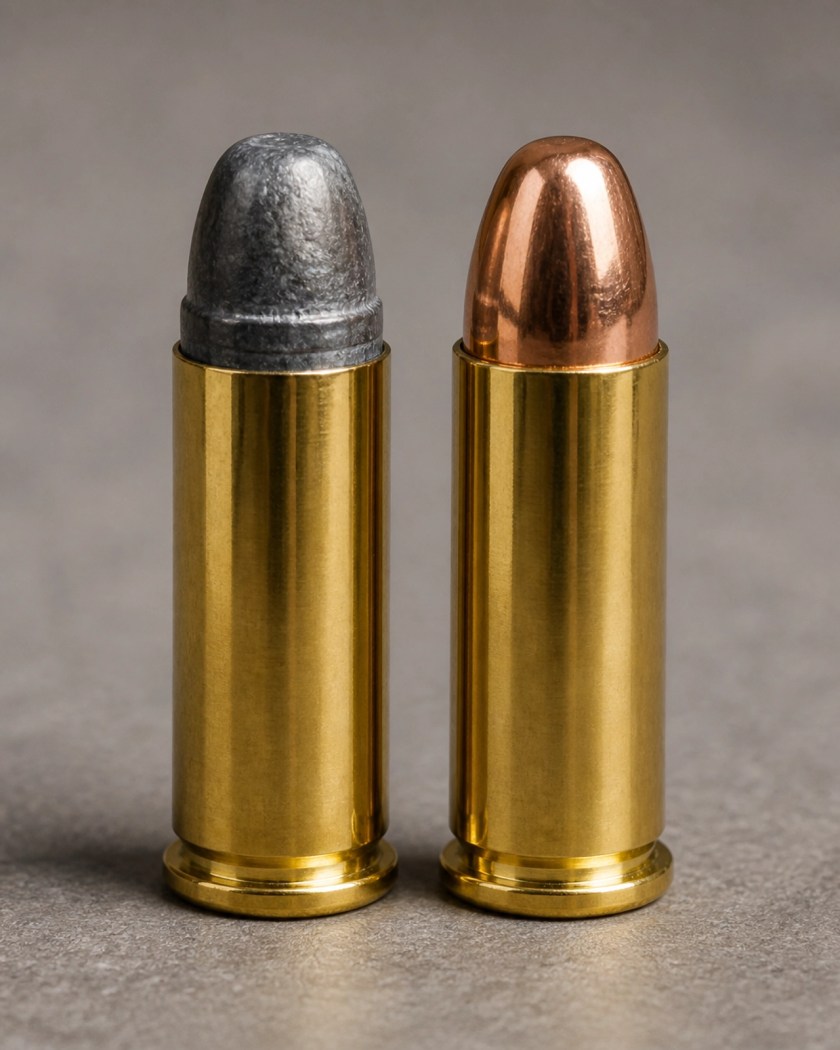
When you start hunting for the absolute lowest price, you’ll often run into Lead Round Nose (LRN) or Lead Semi-Wadcutter (LSWC) rounds. These are essentially just the raw lead bullet without a copper "jacket" or plating.

The Pros: They are almost always the cheapest option. If you are shooting outdoors or in cowboy action competitions, unjacketed lead is a fantastic way to save money.

The Cons: Many modern indoor ranges have strict rules against unjacketed lead because of airborne lead concerns and smoke. Before you buy a 1,000-round case of cheap .38 special lead rounds, make sure your local range will let you shoot them! If you primarily shoot indoors, look for Full Metal Jacket (FMJ) or Total Metal Jacket (TMJ) options, like the Remington 130 gr FMJ, which will keep your barrel cleaner and your range officer happier.

Comparison of a Lead Round Nose (LRN) and a Full Metal Jacket (FMJ) .38 Special round

2. The "10-Box Rule" for Bulk Discounts

At Wholesale Hunter, we’ve been in the game since 1998, and we’ve learned that the secret to saving money on ammo is simple: Buy in bulk.

A single 50-round box of PPU .38 Special might seem affordable, but when you factor in shipping for just one box, your price per round skyrockets. This is where the "10-Box Rule" comes in.

We offer an automatic 5% discount when you buy 10 or more boxes of the same ammunition. When you combine that with the lower shipping cost per round that comes with a heavier box, you can often save $0.05 to $0.10 per shot. That adds up fast over a long afternoon at the range!

Retail shelf showing bulk ammo boxes and a 5% discount sign

3. "Used" 38 Special: Guns vs. Ammo

You might see people searching for used 38 special. Usually, this refers to police trade-in revolvers or vintage firearms: which are a great way to get a high-quality gun on a budget. However, when it comes to ammunition, "used" isn't really a thing: but "surplus" and "remanufactured" are.

  • Surplus: Occasionally, military or police agencies will sell off old stock. This can be a gold mine for cheap ammo, but check to see if it’s corrosive (unlikely for .38 Special, but always worth a look).
  • Remanufactured (Reman): This is ammo loaded using once-fired brass. While it’s cheaper, you want to make sure you’re buying from a reputable source.

For the most reliable experience, we always recommend sticking to factory-new brass-cased ammo from brands like Sellier & Bellot or Winchester. They are reliable, reloadable, and with our bulk discounts, they often cost the same as the "mystery meat" reman ammo you find at gun shows.

4. Don’t Pay for Power You Don’t Need

If you are buying ammo for self-defense, you absolutely want a high-quality hollow point, like the Remington Golden Saber +P. But if you are just punching paper or hitting steel plates, paying for "+P" (over-pressure) loads is a waste of money.

In fact, shooting a lot of +P can put unnecessary wear on your firearm and makes for a more punishing recoil. For the best value, stick to standard pressure 130-grain or 158-grain loads. They are easier on your wallet, easier on your hands, and just as accurate at typical range distances.

Shooter holding a revolver at an indoor range with ammo boxes on the counter

5. Leverage Flexible Payment Options

We know that buying 500 or 1,000 rounds at once is a bigger hit to the bank account than just picking up a single box at the local shop. But as we discussed, the bulk route is the only way to get truly cheap .38 special prices.

To make it easier on your budget, Wholesale Hunter offers Sezzle. This allows you to "Buy Now, Pay Later." You can split your bulk ammo purchase into four interest-free payments over six weeks. This way, you get the deep bulk discount today without having to drop the full amount all at once. It’s the smartest way to keep your range bag full without stressing your monthly budget.

Smartphone showing Sezzle payment option at checkout for bulk ammo

Bonus Tip: Get Paid to Review

Once you’ve taken your new bulk stash to the range, don’t forget to come back and leave a review. We value honest feedback from our shooters, so we offer a 5% discount on your next order just for sharing your experience. Stack that with our 10-box bulk discount, and you’ll be shooting for prices that will make your buddies at the range jealous.

Ready to Stock Up?

Don’t let high prices keep you away from the range. Check out our full selection of .38 Special Ammunition today, pick out 10 boxes of your favorite brand, and watch that 5% discount kick in automatically at checkout!


Best Cheap Ammo for Range Day: 9mm, .38 Special & .410 Slugs on a Budget

There’s nothing quite like the smell of gunpowder in the morning and the satisfying ring of steel targets at 25 yards. Whether you’re a seasoned competitive shooter or someone who just picked up their first handgun, range day is the highlight of the week. But let’s be honest: the cost of feeding your firearms can start to feel like a second mortgage if you aren’t careful.

At Wholesale Hunter, we’ve been helping shooters stay on target since 1998, and if there’s one thing we know, it’s how to find value. You don't need "match-grade" premium rounds to work on your grip, trigger reset, or transition drills. For most of us, "range day" means high-volume practice, and that means looking for the best bang for your buck.

In this guide, we’re breaking down the best budget-friendly options for the most popular range calibers: 9mm, .38 Special, and .410 slugs: plus some tips on how to stretch your shooting budget even further.

9mm: The King of High-Volume Training

If you own a semi-auto handgun, chances are it’s a 9mm. It’s the most popular caliber in the world for a reason: it’s effective, manageable, and: most importantly for our wallets: widely available. When you're looking for 9mm ammo for the range, your best friend is the Full Metal Jacket (FMJ).

Close-up of hands loading 9mm FMJ rounds into a magazine

For sheer economy, it's hard to beat Magtech. Their Magtech Steel Case 9mm 115gr FMJ is a fantastic way to keep your costs down. While some purists shy away from steel cases, modern firearms handle them just fine for practice, and the savings add up quickly over a 500-round session.

If you prefer brass, the Fiocchi Range Dynamics 9mm 115gr FMJ is a gold standard. It’s consistent, clean-burning, and gives you that reloadable brass case if you’re a hobbyist loader. We also frequently stock Aguila 9mm 115gr FMJ, which has a long-standing reputation for reliability at a price point that won't make you wince.

Pro-Tip: If you're practicing with your concealed carry weapon, try mixing in a few rounds of Remington UMC 147gr FMJ. The heavier 147gr bullet mimics the recoil impulse of many defensive hollow points more closely than standard 115gr range loads.

Budget Revolver Shooting: Finding Cheap .38 Special

Revolvers have seen a massive resurgence lately. There’s something meditative about the manual operation of a wheel gun. However, .38 Special can sometimes be surprisingly pricey compared to 9mm. To get more trigger time, look for standard-pressure target loads in the 130gr to 158gr range.

A box of .38 Special FMJ ammo next to a classic revolver

Finding cheap .38 special usually means sticking to FMJ or Lead Round Nose (LRN) configurations. These rounds are designed to punch holes in paper without the added cost of complex bullet expansion technology. Brands like Magtech and CCI Blazer are your go-to options here.

The beauty of the .38 Special is that it’s incredibly forgiving. Even the most budget-friendly rounds tend to be quite accurate out of a 4-inch barrel. If you're shooting a snub-nose for practice, these affordable FMJ rounds are essential for mastering that heavy double-action trigger pull without spending a fortune.

.410 Slugs for Sale: Niche Fun on a Budget

The .410 bore is often overlooked, but it’s a blast (literally) at the range. Whether you’re shooting a dedicated .410 shotgun or a versatile handgun like the Taurus Judge, finding 410 slugs for sale that don't cost $3 a shell is the goal.

A pump-action shotgun next to a box of .410 slugs

For smoothbore practice, the Winchester Super X .410 Gauge 3" Rifled Slug is a reliable and relatively affordable choice. Rifled slugs allow you to shoot with surprising accuracy at shorter ranges, making them a great way to introduce new shooters to "big gun" mechanics without the punishing recoil of a 12-gauge slug.

If you are looking for a budget shotgun to pair with these shells, a simple pump-action model is often the most cost-effective entry point. They are rugged, easy to maintain, and will eat just about any shells you feed them.

Don't Forget the Rifles: 5.56 NATO for the AR-15

While we’re talking about range day, we have to mention the most common rifle round in America. If you're headed to the range with your AR-15, you want 5.56 NATO ammo that runs reliably without a "tactical" price tag.

The PMC X-TAC 5.56 NATO 55gr FMJ is a favorite among our staff. It’s military-grade, brass-cased, and incredibly consistent. If your rifle prefers a slightly heavier projectile for better stabilization, the PMC X-TAC 62gr M855 "Green Tip" is another budget-friendly powerhouse. For those who want the classic American name, Winchester 5.56 NATO 62gr FMJ is always a solid bet.

How to Save Even More at Wholesale Hunter

Buying "cheap" ammo is step one, but how you buy it can save you even more. We’ve built our business on the idea that shooting should be accessible to everyone. Here are three ways to keep more cash in your pocket:

1. The Bulk Discount (5% Off 10+ Boxes)

This is our most popular perk. If you know you’re going to be at the range all summer, don't buy one box at a time. When you buy 10 or more boxes of the same ammunition, we automatically knock 5% off the price. This applies to most of our inventory, from 9mm to .38 Special.

A stack of various ammunition boxes representing bulk buying

2. Flexible Payments with Sezzle

We understand that stocking up for a training course or a big hunting trip can be a hit to the monthly budget. That’s why we offer Sezzle. You can buy your ammo and gear now and pay for it in four interest-free installments over six weeks. It’s a great way to grab that 1,000-round case of 9mm without feeling the sting all at once.

3. Review Rewards

Did you love that new box of Fiocchi? Let people know! Our customer review rewards program gives you 5% off your next order just for sharing your experience. It helps other shooters find the best gear, and it helps you save on your next range haul.

Ready to Hit the Range?

At the end of the day, the best ammo is the ammo you actually get to shoot. Don't let high prices keep you off the firing line. By choosing reliable, budget-friendly brands like Magtech, PMC, and Fiocchi, and taking advantage of bulk discounts, you can double your trigger time for the same price.

Check out our full selection of handgun ammunition, shotgun shells, and rifle cartridges today. We’ve been serving the shooting community since 1998, and we can’t wait to help you gear up for your next range day.

Safe shooting!

9mm vs. 5.56 NATO: Which Caliber Wins for Long-Term Survival Storage?

If you’re reading this, you probably know the feeling. You’re looking at your shelf, your budget, and that empty space in your "just-in-case" locker, and you’re asking the big question: If I can only stack one caliber deep for the long haul, which one should it be?

In the world of survival and preparedness, the debate usually boils down to two giants: 9mm Luger and 5.56 NATO. One is the king of the handgun world, and the other is the undisputed heavyweight of the modern rifle platform. But when we’re talking about "survival storage": meaning ammo that might sit in a can for twenty years or needs to be hauled in a backpack during a bug-out: the rules change a bit.

At Wholesale Hunter, we’ve been helping folks gear up since 1998, and we’ve seen every kind of stockpile you can imagine. Today, we’re breaking down the 9mm vs. 5.56 debate specifically through the lens of long-term storage, weight efficiency, and survival utility.

9mm Luger: The High-Volume King

When it comes to sheer volume, 9mm is hard to beat. If your survival plan involves staying mobile or if you’re working with limited storage space, 9mm is your best friend.

Why 9mm Wins for Storage:

  • Space Efficiency: You can fit roughly 500 rounds of 9mm in the same physical space as 200 to 250 rounds of 5.56. When you're stacking boxes in a safe or a closet, that adds up fast.
  • Cost Per Round: Generally speaking, 9mm is about half the price of 5.56. This means you can build a massive "rainy day" fund much faster. If you're looking for a bulk deal, something like this Winchester 115gr FMJ 1000-round case is a classic choice for deep storage.
  • Weight: Carrying 500 rounds of 9mm in a pack is roughly 13–15 lbs. That same weight in 5.56 gets you significantly fewer rounds.

Comparison of 9mm boxes vs 5.56 boxes

The Survival Role

9mm isn't just for handguns. With a Pistol Caliber Carbine (PCC), you can reach out a bit further with the same ammo. Plus, 9mm is the most common handgun caliber in the world. If you ever need to trade or scrounge, 9mm is the "universal currency" of the ammo world.

5.56 NATO: The Distance & Defense Heavyweight

While 9mm is great for volume, the 5.56 NATO is there for when things get serious. It’s a rifle round, and in a survival scenario, a rifle gives you a reach that a handgun simply can't match.

Why 5.56 Wins for Survival:

  • Effective Range: A 9mm starts behaving like a falling rock after 50–100 yards. A 5.56 rifle is effective out to 300 yards and beyond. For perimeter defense, the 5.56 is the clear winner.
  • Stopping Power: Velocity is the name of the game here. The 5.56 creates significantly more terminal damage than 9mm due to fragmentation and hydrostatic shock.
  • Barrier Penetration: If you need to stop a threat behind a car door or light cover, 9mm will likely struggle. A solid PMC X-TAC 62gr M855 round is designed to punch through where handguns fail.

The Storage Trade-off

The downside? It's bulky. A standard 20-round box of 5.56 is roughly the same size as a 50-round box of 9mm. If you’re stocking up, check out the PMC 5.56 NATO 55gr FMJ for a reliable, standard-issue storage option.

The Survival Math: Space and Weight

Let’s look at the numbers. If you have a standard .30 caliber ammo can, you can comfortably fit about 1,000 rounds of loose 9mm. In that same can, you’re looking at only about 400–500 rounds of 5.56 NATO.

If your plan is to hunker down on a homestead, the bulk of 5.56 doesn’t matter as much. But if your "Plan B" involve a backpack and a long walk, every ounce and every inch of space counts. This is why many survivalists prefer to stack 9mm three-to-one over their rifle ammo.

Survival gear layout with rifle and handgun

Don’t Forget the Specialized Roles

While 9mm and 5.56 are the "big two," a well-rounded survival cache usually has a few supporting players.

  • Small Frame Defense: Sometimes a compact revolver is the right tool for the job. If you're keeping a snub-nose handy, searching for cheap 38 special to keep in reserve is a smart move.
  • Compact Firepower: For a "truck gun" or a lightweight 5.56 option, many look into Kel Tec PLR 16 accessories to turn a compact pistol-rifle hybrid into a serious survival tool.
  • Perimeter & Small Game: Don't sleep on the versatility of a shotgun. Whether it's for home defense or harvesting meat, having 410 slugs for sale and a few budget shotguns in the safe can provide options that neither 9mm nor 5.56 can cover.

How to Make It Last 20+ Years

Regardless of which caliber you choose, the how of storage is just as important as the what. Ammunition is incredibly resilient, but its two biggest enemies are moisture and extreme temperature swings.

  1. Use Metal Ammo Cans: Plastic is okay for the range, but for 20-year storage, steel is king. Ensure the rubber gasket is intact and provides a tight seal.
  2. Add Desiccants: Throw a few silica gel packs into every can. They’re cheap insurance against the humidity that causes brass corrosion.
  3. Stay Cool and Dry: Avoid the garage or an outdoor shed if possible. A basement or a climate-controlled closet is much better for preventing powder degradation.
  4. Label and Rotate: Use the "First In, First Out" (FIFO) method. Label your cans with the purchase date and use the oldest stuff for your regular range trips.

Placing a desiccant pack into an ammo can

The Wholesale Hunter Advantage

Building a survival stockpile shouldn't break the bank. That’s why we offer a 5% discount when you buy 10+ boxes of ammunition, making it easier to stack those cans high.

Plus, if you're looking to add a new long gun to your collection for your survival kit: be it an AR-15 for that 5.56 or a PCC for your 9mm: we offer free shipping on all long guns. And if you want to spread the cost out over time, we’ve partnered with Sezzle so you can buy now and pay later with zero interest.

The Verdict: Which One Wins?

If we have to pick a winner for pure storage efficiency, 9mm Luger takes the trophy. Its combination of low cost, small footprint, and light weight makes it the ultimate "bank account" for survival ammo.

However, survival isn't just about how much you have; it's about what you can do with it. For defensive capability, 5.56 NATO is the essential cornerstone.

Our advice? Stack 9mm for volume and trade, but keep a solid, high-quality reserve of 5.56 (like the Hornady American Gunner 9mm for your sidearm and PMC for your rifle) for when performance is the only thing that matters.

Ready to start stacking? Browse our full selection of ammunition and find the best deals for your long-term storage today.

Colt Thunderer Replica: A Modern Look at a Classic Western Icon

When you think of the Old West, the image that usually flashes through your mind is a dusty gunslinger with a Single Action Army strapped to his hip. But if you were actually walking the streets of Lincoln County or Tombstone in the late 1800s, you might have spotted something a bit more compact, a bit more elegant, and: truth be told: a lot more temperamental.

The Colt 1877 Thunderer was a revolutionary design that promised the speed of a double-action trigger with the classic aesthetics of a Colt. While the original was a "mechanical nightmare" that would make most modern gunsmiths break out in a cold sweat, its legacy lives on through modern replicas. Today, we’re taking a look at why this icon remains a favorite for collectors and Cowboy Action shooters alike, and how you can get that legendary look without the historical headaches.

The Legend and the Legacy: Billy the Kid’s Choice

History is often written in lead, and few outlaws wrote more of it than William H. Bonney, better known as Billy the Kid. While Hollywood often depicts the Kid with a standard Peacemaker, historical records and tintypes suggest he had a particular affinity for the Colt 1877 series. Specifically, he was rumored to be carrying a .41 caliber Thunderer when Pat Garrett finally caught up with him in the dark of Pete Maxwell’s bedroom.

An aged tintype-style photograph of a young outlaw resembling Billy the Kid holding a bird's-head grip revolver.

The Thunderer wasn't just another revolver; it was Colt's first foray into the world of double-action (DA) handguns. It came in three flavors, each with a poetic name provided by a clever distributor:

  • The Lightning: Chambered in .38 Long Colt.
  • The Thunderer: Chambered in .41 Colt.
  • The Rainmaker: A rare .32 caliber variant.

The "Thunderer" moniker stuck the hardest. It offered a bird's-head grip that fit the hand like a glove and a profile that was easy to conceal under a dusty frock coat. It was the "concealed carry" choice of the 19th century.

The "Break-a-Matic" Reality

Despite its beauty, the original 1877 was famously fragile. Its internal mechanism was described as "watch-like": which is a compliment if you're a clockmaker, but a death sentence for a firearm intended for the rough-and-tumble life of the frontier. The springs were delicate, the timing was easily disrupted, and once they broke, they were almost impossible to fix.

In fact, if you find an original 1877 today, most experts recommend you leave it in the display case. Shooting one with modern smokeless powder (even light loads) is a recipe for disaster. But that’s exactly where the modern replica steps in to save the day.

The Modern Solution: The Cimarron Thunderer

If you want the swagger of Billy the Kid without the mechanical failure, companies like Cimarron Firearms have perfected the formula. Their modern Cimarron Thunderer (manufactured by Uberti) captures the visual essence of the 1877 but swaps out the "watch-like" double-action disaster for a rock-solid Single Action Army (SAA) mechanism.

By building the Thunderer profile on a Model P frame, you get a gun that can actually handle a day at the range. These replicas feature the iconic bird's-head grip and the specific "hump" on the backstrap that made the original so comfortable.

Why the Bird's Head Grip Matters

Most single-action revolvers use the traditional "plow-handle" grip. While great for heavy recoil (the gun rolls up in your hand), it can feel bulky for shooters with smaller hands. The bird's-head grip on the Thunderer changes the ergonomics entirely.

A detailed close-up of the bird's head grip on a Western-style revolver showing the checkered wood and blued steel.

The grip allows the revolver to sit lower in the hand, offering a more natural pointing angle. It’s snappy, quick to draw, and looks incredible in a high-ride leather holster. Whether you're into Cowboy Action Shooting or just want a conversation piece for your collection, the Thunderer replica offers a unique handling experience you won't get from a standard Peacemaker.

Fueling Your Western Icon: Range Practice on a Budget

One of the best things about modern replicas is that they are often chambered in accessible calibers like .45 Colt or .357 Magnum/.38 Special. If you’ve picked up a replica in .357, you know that high-volume practice can get expensive quickly.

At Wholesale Hunter, we’re all about keeping you on the range. If you’re looking to break in your new revolver, finding cheap 38 special ammo is the way to go. We recommend checking out bulk options from brands like Magtech or Federal. Remember, we offer a 5% discount when you buy 10 or more boxes, so stocking up for a weekend of target practice is the smartest move for your wallet.

From the Frontier to the Home Front: Modern Essentials

While the Thunderer is a masterpiece of historical design, we know our customers need gear for the modern world, too. Sometimes the "classic" solution isn't a revolver, but a reliable shotgun or a tactical pistol.

The Modern Frontier: Budget Shotguns and .410 Slugs

The Thunderer was originally loved for its compact size and "stopping power" in the .41 caliber. Today, many homeowners look for similar qualities in a defensive firearm. If you're looking for a versatile, reliable, and affordable option, our selection of budget shotguns like the Mossberg Maverick 88 is hard to beat.

For those who prefer a lighter-recoiling option, the .410 bore has seen a massive resurgence. If you're kitting out a camp gun or a home defense setup, having the right 410 slugs for sale is vital. We carry a wide variety of slug loads from Winchester and Hornady that turn a small-bore shotgun into a serious tool for protection or small-game hunting.

A flat-lay photograph featuring a Maverick 88 shotgun, a Kel-Tec PLR-16, and various boxes of ammunition including .38 Special and .410 slugs.

Kitting Out Your Gear

Just like the outlaws of old customized their rigs with fancy leather and silver inlays, modern shooters love to tweak their setups. If you've moved past the world of revolvers and into the tactical realm, we’ve got you covered there, too.

If you own a Kel-Tec PLR-16, you know it’s a blast to shoot but needs a few tweaks to really shine. We carry a full range of kel tec plr 16 accessories, including Magpul PMAGs and optics risers to help you get the most out of that 5.56 pistol.

Conclusion: Why We Still Love the Thunderer

The Colt Thunderer replica represents more than just a firearm; it represents a bridge between the romanticized past and the functional present. It’s a way to hold a piece of Billy the Kid’s legend in your hand without worrying about whether the gun will actually fire when you pull the trigger.

Whether you're looking for that perfect Single Action revolver, hunting for bulk ammo deals, or looking to upgrade your modern tactical gear, Wholesale Hunter is here to help. We’ve been serving the shooting community since 1998 with the same grit and dedication as the frontiersmen who first carried the Thunderer.

So, grab a box of ammo, head to the range, and channel your inner outlaw. Just maybe leave the cattle rustling to the history books.


Best Shotgun Under $300.00: Can You Really Get a Reliable Home Defense Tool on a Budget?

When you’re looking to protect your home and family, the price tag is usually the last thing you want to skimp on. We’ve all heard the old saying, "You get what you pay for," and in the world of firearms, that often translates to a fear that a "budget" gun will fail when you need it most.

But here’s the truth from the front lines of the firearms industry: in 2026, you absolutely can find a rock-solid, dependable budget shotgun for under $300. In fact, some of the most legendary workhorses in the history of home defense live right in that price bracket.

At Wholesale Hunter, we’ve been helping shooters find the right gear since 1998. Whether you're looking for cheap 38 special ammo for your revolver or the best budget shotguns for home security, we believe in value without compromise.

The King of the Sub-$300 Category: Mossberg Maverick 88

If you ask any group of firearms experts what the best shotgun under $300 is, the answer is almost always the same: the Mossberg Maverick 88.

Often called the "little brother" to the legendary Mossberg 500, the Maverick 88 is the gold standard for budget reliability. It’s a no-frills, pump-action workhorse that shares many parts with the 500, including the barrel and magazine tube. The primary differences are the trigger-guard mounted cross-bolt safety (instead of the tang safety) and a pinned forend.

Mossberg Maverick 88 Security close-up

Why the Maverick 88 Wins:

  • Dual Extractors & Twin Action Bars: These prevent the action from binding, ensuring a smooth cycle every time you rack the slide.
  • Massive Aftermarket Support: Since it shares so much with the Mossberg 500, you can easily find stocks, lights, and rails to customize your setup later.
  • Proven Track Record: It’s been "torture tested" by thousands of shooters over decades. It just works.

You can typically find the Maverick 88 Security model with an 18.5-inch barrel for well under $275. At that price, you still have money left over for a couple of boxes of buckshot and a range day.

The "Budget-Budget" King: Stevens 320 Security

If you’re looking to squeeze even more value out of your $300, the Stevens 320 Security (by Savage Arms) is a formidable contender. Often priced around the $200 mark, this shotgun is modeled after the Winchester 1300 and features a rotary bolt design and dual slide bars.

Stevens 320 Security shotgun

What makes the Stevens 320 stand out in the budget world is the variety of configurations. You can get it with a traditional stock, a pistol grip, or even ghost-ring sights, features that usually command a premium on other brands. It cycles quickly and has a very solid "clack-clack" that provides that classic pump-action peace of mind.

Check out our current stock of Stevens 320 shotguns to see which configuration fits your home layout best.

The Ultra-Budget Workhorse: Citadel CDP-12 Force

Sometimes the budget is really tight, or you just need a "truck gun" that you aren't afraid to get a little dirty. The Citadel CDP-12 Force is often the lowest-priced pump shotgun in our catalog, frequently coming in under $180.

Despite the low entry cost, the CDP-12 Force is a serious tool. It features a 20-inch barrel, a 3-inch chamber, and often comes with a Marinecote-style finish for superior corrosion resistance. This makes it an excellent choice for damp environments or as a farm gun that lives in the back of a UTV. It’s lightweight, simple, and far more reliable than its price point would suggest.

Can You Get a Semi-Auto Under $300?

A few years ago, the answer would have been a hard "no." However, in 2026, we’ve seen the rise of reliable, gas-operated semi-autos like the Black Aces Tactical Pro Series S Max.

While semi-autos are generally more finicky with ammo than pump guns, the Pro Series S Max has earned high marks for its ability to cycle standard buckshot right out of the box. Sitting right at the $299 cap, it’s the best way to get semi-auto speed without breaking your three-bill budget.

Choosing the Right Home Defense Load

Buying the gun is only half the battle; you need to feed it. For most home defense scenarios, 12-gauge 00 buckshot is the industry standard. However, if you or a family member are recoil-sensitive, don't overlook the .410 bore.

While .410 has a reputation as a "beginner's gauge," modern defensive 410 slugs for sale have plenty of stopping power at across-the-room distances. A .410 pump-action shotgun is much easier to manage for smaller-statured shooters while still providing a significant tactical advantage over a small-caliber handgun.

410 gauge slugs on camo

If you find that a shotgun just isn't the right fit for your home defense plan, many of our customers opt for a reliable revolver. We always keep a healthy stock of cheap 38 special loads for those who prefer the simplicity of a "wheel gun" for their nightstand.

Personalizing Your Tool: Accessories

A budget shotgun is a blank canvas. Once you’ve secured your firearm, you might want to add a light or a better sling. We see this a lot with other platforms too, like the Kel-Tec PLR-16. People buy the base gun and then realize they need kel tec plr 16 accessories like a muzzle brake or a single-point sling to really make it shine.

The same applies to your budget shotgun. A simple weapon light is arguably the most important accessory for a home defense tool. You can’t shoot what you can’t identify, and a $40 light on a $250 Maverick 88 creates a world-class defense package for under $300 total.

Final Verdict: Is a $300 Shotgun Enough?

Absolutely. You don’t need to spend $1,500 on a high-end Italian semi-auto to protect your home. A Mossberg Maverick 88 or a Stevens 320 will go "bang" every single time you pull the trigger, provided you do your part with maintenance and practice.

Stacked boxes of 38 special ammo

At Wholesale Hunter, we want to make sure you can afford the protection you need. That’s why we offer free shipping on all long guns and flexible payment options through Sezzle. You can pick up a Maverick 88 today and split the cost into four interest-free payments: making home security more accessible than ever.

Don't forget to check our Bulk Ammunition section where you can save an extra 5% when you buy 10 or more boxes. Stay safe, stay prepared, and we'll see you at the range!

7 Mistakes You’re Making with Bulk 9mm and 5.56 NATO (and How to Fix Them)

If you’re anything like us here at Wholesale Hunter, you know there’s nothing quite like the peace of mind that comes with a "stack 'em deep" philosophy. Whether you're heading to the range for a high-volume training session or just making sure you’re ready for whatever comes next, buying bulk 9mm and 5.56 NATO is the smartest way to keep your cost-per-round low.

But here’s the thing: buying a thousand rounds of ammo isn't just about clicking "add to cart" on the cheapest listing you see. Over the years, we’ve seen plenty of folks make a few "oops" moves that end up costing them more in the long run: either in jammed guns, ruined ammo, or missed savings.

To help you keep your range days smooth and your wallet happy, we’ve rounded up the seven biggest mistakes people make when buying bulk ammo and, more importantly, how you can fix them.


1. Chasing the Bottom Dollar (Steel vs. Brass)

It’s tempting to sort by "Price: Low to High" and grab the first thing that pops up. Usually, that’s going to be steel-cased ammunition. Now, don’t get us wrong: steel-cased ammo has its place (it's great for "trash can" guns and high-volume plinking where you don't care about the cases).

However, the mistake is assuming it'll run the same as brass. Steel doesn't expand and seal the chamber as well as brass does, which means more carbon blowback into your action. If you’re running a sensitive pistol or a high-end rifle, you might find yourself dealing with more "failures to extract" than you’d like.

The Fix: Read the description! If you want maximum reliability and the option to reload later, stick with a solid brass-cased option like the Aguila 9mm 115gr FMJ. If you are looking to save every penny and your gun eats anything, then Magtech Steel Case 9mm is a fantastic budget-friendly choice.

Aguila 9mm Luger 50 Rounds Ammunition

2. Caliber and Chamber Confusion

This one specifically bites the 5.56 NATO and .223 Remington crowd. While they look nearly identical, they aren't exactly the same. 5.56 NATO is loaded to a higher pressure than .223 Remington. If you have a rifle chambered specifically for .223 Rem (common in older bolt-actions or some target rifles), running high-pressure bulk 5.56 can cause safety issues.

The Fix: Check the barrel of your rifle. If it says "5.56 NATO" or ".223 Wylde," you’re good to shoot both. If it says ".223 Remington," stick to .223. For a gold-standard bulk rifle round that runs beautifully in most AR platforms, you can’t go wrong with PMC X-TAC 5.56 NATO 55gr FMJ.

3. Ignoring Grain Weight

In the 9mm world, you’ll usually see 115-grain, 124-grain, and 147-grain. The mistake many make is buying 1,000 rounds of 115-grain because it’s the cheapest, only to realize their favorite sub-compact or suppressed setup prefers the heavier 147-grain loads for better cycling or subsonic performance.

For 5.56, grain weight matters for your barrel’s "twist rate." A 1:7 twist barrel loves heavier 62gr or 77gr bullets, while a 1:12 twist barrel might struggle to stabilize anything over 55gr.

The Fix: Know your gear. If you’re shooting through a suppressor, grab some 147gr 9mm. If you have a modern AR-15 with a 1:7 or 1:8 twist, consider stepping up to PMC X-TAC 62gr M855 for a bit more stability at distance.

PMC X-TAC 5.56 NATO 55 Grain FMJ Ammo

4. The Storage Trap: Humidity is the Enemy

Buying bulk means you’re going to have ammo sitting around for a while. A huge mistake is leaving those cardboard boxes on a concrete garage floor or in a damp basement. Moisture will eventually corrode the brass and can even seep into the primers, leading to "click" instead of "bang."

The Fix: Invest in some airtight ammo cans and desiccant packs. Transfer your bulk purchases into a cool, dry place. Even if you’re buying 410 slugs for sale for next season, keeping them in a climate-controlled area ensures they’ll be ready when that buck finally steps out.

A close-up of an open metal ammo can with desiccant packs

5. Not Testing Your Gear First

There is nothing more heartbreaking than buying a "pallet" of ammo only to realize your gun hates it. Maybe the overall length is just a hair too long for your mags, or the primers are too hard for your firing pin. This is especially true for specialized platforms: for example, if you're looking for Kel Tec PLR 16 accessories to build out a fun range toy, you want to make sure the bulk 5.56 you buy actually cycles in that short piston system.

The Fix: Buy a few boxes first! We recommend trying 50-100 rounds before committing to a 1,000-round case. Once you know it’s a match, then go big.

6. Forgetting the "Buy 10" Rule

Most people buy one or two boxes at a time because the total price looks smaller. But at Wholesale Hunter, we want to reward the planners. One of the biggest mistakes is leaving money on the table by not taking advantage of bulk discounts.

The Fix: Check out our bulk ammunition discount. When you buy 10 or more boxes of the same ammo, you automatically get 5% off. When you're buying centerfire rifle or handgun rounds, that 5% adds up fast: often covering the cost of a whole extra box or two! Plus, don't forget that we offer free shipping on all long guns, so if you're picking up one of our budget shotguns to go with your ammo order, you’re already ahead of the game.

7. Neglecting the "Non-Primary" Calibers

We all focus on 9mm and 5.56 because they are the "workhorses." But a common mistake is letting your other skills get rusty because you didn't stock up on secondary calibers. If you carry a snub-nose revolver for backup, you need to practice with it just as much as your primary.

The Fix: While you're grabbing your bulk cases, toss in some cheap 38 special for some wheel-gun therapy. It’s a great way to work on trigger control without the recoil of your 9mm duty gun. Variety is the spice of life: and it makes for a much better range day.


Why Wholesale Hunter?

Since 1998, we’ve been the go-to source for shooters who want "wholesale" prices without needing a secret handshake. We carry over 20,000 products, and we’re always looking for ways to save you money.

  • Flexible Payments: Use Sezzle to buy your bulk ammo now and pay it off over time with zero interest.
  • Review Rewards: Leave a review on your purchase and we’ll send you a 5% off coupon for your next order.
  • Expert Advice: From Craig Boddington’s caliber dictionary to our tactical blogs, we’re here to make sure you have the right gear for the job.

Stop making these bulk-buying mistakes and start shooting more for less. Whether you need a case of 5.56 or you're hunting for the best 410 slugs for sale, we’ve got you covered.

Shop All Ammunition at Wholesale Hunter Here!

Wholesale Hunter Logo


7 Mistakes You’re Making with Budget Shotguns (and How to Find the Best One Under $300)

There’s something incredibly satisfying about finding a bargain that actually works. In the world of firearms, the "budget shotgun" is the ultimate example. For under $300, you can own a tool that’s capable of putting meat on the table, winning a weekend clay match, or protecting your home.

But here’s the catch: the "budget" world is a minefield. For every diamond in the rough, there are three or four "boat anchors" that will fail you when you need them most. We’ve been in the game at Wholesale Hunter since 1998, and we’ve seen it all, from the "tacticool" imports that rattle apart after ten rounds to the shooters who spend so much on their gun they can’t afford the shells to practice with.

If you’re looking to gear up without breaking the bank, avoid these seven common mistakes. Plus, we’ll show you exactly which guns are currently winning the "under $300" crown.


1. Buying Based on Price Instead of Reliability

The biggest mistake you can make is chasing the absolute lowest price tag. Yes, you might find a no-name pump-action for $150, but ask yourself: Why is it that cheap?

Reliability is non-negotiable. A budget shotgun that jams is just an expensive club. Instead of the absolute cheapest thing you can find, look for a "budget version" of a proven platform. The Mossberg Maverick 88 is the gold standard here. It’s essentially a Mossberg 500 with a few cost-cutting changes (like the trigger guard safety and pinned forend), but it keeps the legendary reliability. We often have these in stock starting well under $275.

2. Falling for the "Budget Over/Under" Trap

We get it: over/under (O/U) shotguns look classy. But manufacturing two barrels that are perfectly regulated (meaning they both hit the same spot) is expensive. When you see a brand-new O/U for $299, run the other way.

Common issues with ultra-cheap doubles include faulty safeties, "doubling" (both barrels firing at once), and poor barrel regulation. If your budget is under $300, stick to a pump-action. You’ll get a much higher quality tool for your money. If you really want that dual-barrel feel, save up for a quality used model or a higher-tier entry.

3. The "Pistol-Grip-Only" Myth

It looks cool in the movies, but a pistol-grip-only shotgun is one of the hardest firearms to shoot accurately. Without a stock to shoulder, you lose a point of contact, making recoil much harder to manage and follow-up shots significantly slower.

If you’re buying for home defense, get a full stock. You can always add accessories later, like a TacStar Side Saddle to keep extra rounds handy, but start with a platform you can actually aim and control.

A variety of ammunition boxes including .38 Special, .410 slugs, and 12-gauge shells on a workbench.

4. Using the Wrong Ammo for the Job

Many new shooters buy a 12-gauge because it’s "the best," then realize the recoil is more than they bargained for. Or, they load up birdshot for home defense, thinking it’s "safer."

Mistake! Birdshot is for birds. For defense, you want buckshot. If the recoil of a 12-gauge is a concern, consider a 20-gauge or even a .410. In fact, many hunters are discovering that modern 410 slugs for sale are incredibly effective for small to medium game and home defense in a compact package. Don't let ego dictate your caliber; choose what you can shoot well.

5. Neglecting Maintenance and Storage

A budget shotgun often lacks the high-end finishes of a $2,000 Italian scattergun. This means they are more prone to rust if neglected.

One of the most common mistakes is storing a shotgun in a foam-lined soft case for months. Those cases trap moisture against the metal. To keep your budget beauty running, you need to clean the receiver and oil the metal regularly. It doesn't take much: just a good cleaning kit and five minutes after a range trip.

A person cleaning the internal receiver of a pump-action shotgun on a maintenance mat.

6. Forgetting the "Hidden" Training Cost

If you spend every last cent of your $300 budget on the gun, you’ve made a mistake. A gun you haven't practiced with is a liability. You need to budget for shells and range time.

A great way to stay sharp without blowing your hunting budget is to cross-train. Many of our customers pick up a box of cheap 38 special for their revolvers to practice basic marksmanship and trigger control at the range between shotgun sessions. Practice is where the real value is found.

7. Buying a "Dead-End" Gun

Some budget shotguns are proprietary, meaning you can't find extra barrels, different stocks, or mounting rails for them. When you buy a "dead-end" gun, you’re stuck with it exactly as it is.

Look for guns with a healthy aftermarket. This is another reason the Maverick 88 wins: it can use almost any barrel or accessory made for the Mossberg 500. This versatility is why we also see people flock to platforms like the PLR-16; people love being able to swap in Kel Tec PLR 16 accessories like forends and slings to customize their experience as their budget allows.


The Best Shotguns Under $300: Our Top Picks

A side-by-side comparison of a Maverick 88 and a Stevens 320 pump-action shotgun.

If you have $300 in your pocket and need a reliable shotgun today, these are the two we recommend most often:

1. The Mossberg Maverick 88

  • Why it wins: It’s the king of budget reliability. Made in the USA (Texas!), it’s rugged, simple, and compatible with the massive Mossberg 500 aftermarket.
  • Best For: Home defense and general-purpose use.
  • Pro Tip: Add an Uncle Mike's Buttstock Shell Holder to keep 5 extra rounds on the gun for less than $20.

2. The Stevens 320 (by Savage Arms)

  • Why it wins: It’s a clone of the Winchester 1300 "Speed Pump" design. It features a rotary bolt and a very smooth action for the price. It often comes standard with a pistol grip stock and ghost ring sights, which are huge upgrades at this price point.
  • Best For: Those who want a "tactical" feel straight out of the box.

Final Thoughts

Finding a great shotgun for under $300 isn't about finding the lowest price: it's about finding the highest value. By sticking to proven pump-action designs, budgeting for quality ammunition, and avoiding the "tacticool" traps, you can walk away with a firearm that will last a lifetime.

Ready to find your next favorite scattergun? Check out our full selection of new and used shotguns and take advantage of our free shipping on long guns and Sezzle "Buy Now, Pay Later" options!

9mm Secrets Revealed: What Experts Don’t Want You to Know About Defensive Loads

If you’ve spent any time at the range or browsing firearms forums lately, you know that the 9mm is currently the undisputed king of the handgun world. Law enforcement agencies have swapped back to it, and concealed carry enthusiasts can't get enough of the high capacity and manageable recoil.

But here’s the kicker: just because you’ve got a high-quality 9mm pistol doesn't mean you’re actually ready for a defensive situation. Most people walk into a shop, grab the first box of "defensive" ammo they see, and call it a day.

The truth is, there are a few "secrets" about 9mm defensive loads that often get glossed over in the marketing brochures. From the way barrel length changes everything to the massive difference between penetration and expansion, there is a lot more to your carry ammo than a fancy box.

Today, we’re peeling back the curtain. Let’s dive into what you really need to know about 9mm defensive ammunition before you stake your life on it.

Secret 1: Penetration Is More Important Than Expansion

We’ve all seen the pictures of perfectly mushroomed hollow points. They look impressive, and manufacturers love to show them off. But here is the secret: expansion is secondary.

In a defensive encounter, your bullet needs to reach the vital organs of a threat to stop them effectively. If a bullet expands too quickly and too wide, it creates a lot of drag. That drag can cause the bullet to stop short, failing to penetrate deep enough to be effective: especially if it has to pass through heavy clothing, an arm, or an intermediate barrier.

The FBI standard for defensive ammo is 12 to 18 inches of penetration in 10% ballistic gelatin. Why that deep? Because human bodies aren't flat, and engagements rarely happen in a straight line. You want a round that can punch through 14 inches of tissue even after hitting a forearm or a heavy winter coat.

When you’re looking at modern 9mm defensive loads, look for consistent penetration first. If it doesn't hit that 12-inch mark, it doesn't matter how pretty the expansion is.

Realistic photograph of a clear block of ballistic gelatin showing a bullet path

Secret 2: Your Barrel Length Is a Game Changer

Most ballistics data you see on the back of an ammo box is recorded using a 4-inch or 5-inch "test barrel." But are you actually carrying a full-sized duty gun?

If you’re rocking a subcompact or a micro-9mm with a 3-inch barrel, that bullet is leaving the muzzle significantly slower than it would from a full-sized Glock 17 or Sig P320.

Here is the secret: Hollow points are designed to expand within a specific "velocity window."

If your barrel is too short, the bullet might not be moving fast enough to force the hollow point to open up. When a hollow point fails to expand, it acts like a Full Metal Jacket (FMJ) round: meaning it might over-penetrate and fail to dump its energy into the target. On the flip side, some lighter bullets might lose too much energy and under-penetrate.

If you carry a short-barreled pistol, you need to look for loads specifically tested in short barrels. Brands like Federal and Speer often have "short barrel" specific lines that use different powder blends and bullet designs to ensure they perform even at lower velocities.

Secret 3: The +P Myth

You’ll see a lot of boxes labeled "+P" or even "+P+." This stands for "Over Pressure." These rounds are loaded to higher pressures than standard 9mm, resulting in higher muzzle velocities.

Many "experts" will tell you that you must carry +P to make the 9mm effective. Here’s the secret: For most modern defensive loads, +P is often unnecessary.

Modern bullet technology (like the Hornady Critical Defense or Speer Gold Dot) is so efficient that it doesn’t need the extra speed to expand reliably. In fact, adding +P to a high-quality modern round often results in:

  1. More Recoil: This makes follow-up shots slower and less accurate.
  2. More Wear and Tear: It beats up your gun faster.
  3. Marginal Gains: You might get an extra inch of penetration or 0.05 inches of expansion, but at the cost of control.

Unless your specific firearm really likes a certain +P load, standard pressure defensive rounds from a reputable manufacturer are usually more than enough.

Diversifying Your Kit: Beyond the 9mm

While we love the 9mm, a well-rounded enthusiast knows that different tools serve different purposes. Maybe you have a budget shotgun for home defense, or you keep a revolver in the nightstand.

If you’re a fan of the classics, we know the struggle of finding cheap 38 special for practice. Training with your secondary firearms is just as important as training with your primary carry gun. We also see a lot of folks looking for specialized loads like 410 slugs for sale for their survival or "truck guns."

Speaking of specialized gear, if you own a Kel-Tec PLR-16, you know it’s a unique beast. Finding the right Kel Tec PLR 16 accessories like optics mounts or muzzle devices can turn that pistol into a serious range toy or defensive tool.

A Kel-Tec PLR-16 pistol with various accessories

Secret 4: The "Training Gap" Will Get You

This is the secret the ammo companies definitely don't want you to know: The most expensive ammo in the world won't save you if you don't train with it.

Most people buy one box of expensive JHPs, load their magazines, and then spend the rest of the year shooting cheap FMJ "white box" ammo at the range.

The problem? Defensive ammo often feels different. It has more "snap," a different point of impact, and most importantly, it might cycle differently in your specific gun.

You should always fire at least 50 to 100 rounds of your chosen defensive load through your carry gun to ensure 100% reliability. If your gun jams once in those 50 rounds, that is a deal-breaker. At Wholesale Hunter, we recommend buying in bulk so you can afford to "vet" your carry ammo. Remember, you get 5% off when you buy 10+ boxes of the same ammo, making it easier to stockpile and train.

A collection of various ammunition boxes including 9mm and 38 Special

How to Choose the Right Load

So, how do you navigate all these secrets?

  1. Stick to the Big Names: Federal, Speer, Hornady, and Winchester spend millions on R&D. Stick to their "Duty" or "Self-Defense" lines.
  2. Match the Weight: 124-grain and 147-grain are the "Goldilocks" weights for 9mm. They offer a great balance of penetration and manageable recoil.
  3. Check the Vitals: Look up independent gel tests (there are plenty on YouTube) for your specific gun and ammo combo.
  4. Buy Value: Don't get gouged. Use options like Sezzle to buy your defensive ammo in bulk so you can train without breaking the bank.

Wrapping It Up

The 9mm is a fantastic caliber, but it isn't magic. The "secret" to a successful defensive setup isn't finding a "magic bullet": it's finding a reliable, high-quality load that functions perfectly in your specific gun and that you can shoot accurately under pressure.

Whether you're looking for the latest 9mm JHPs, hunting for cheap 38 special for your wheelgun, or looking to upgrade your home defense with budget shotguns, we’ve got you covered.

Stay safe, keep training, and we'll see you at the range!