

When it comes to building the ultimate survival kit, the debate usually boils down to two heavy hitters: the 9mm Parabellum and the 5.56 NATO. It’s the age-old "Pistol vs. Rifle" argument, but with a survivalist twist. If the world goes sideways tomorrow, which caliber do you want by your side?
At Wholesale Hunter, we talk to folks every day who are prepping for everything from a weekend lost in the woods to full-on societal "hiccups." Choosing the right caliber isn't just about what looks cool at the range; it's about weight, range, terminal performance, and logistics. Let’s break down the pros and cons of 9mm and 5.56 NATO to see which one deserves a spot in your bug-out bag.
The Case for 9mm: Portability and Practicality
The 9mm is the most popular handgun caliber in the world for a reason. In a survival situation, its primary strengths are weight and versatility.
Weight Matters
When you’re on the move, every ounce counts. You can carry significantly more 9mm ammunition than 5.56 NATO for the same weight. If you're humping a pack over twenty miles of rough terrain, the difference between carrying 200 rounds of 5.56 versus 400 rounds of 9mm is massive.
The PCC Advantage
One of the coolest things about 9mm is the rise of the Pistol Caliber Carbine (PCC). A PCC allows you to share magazines and ammunition between your sidearm and your long gun. This streamlines your gear and simplifies your logistics. If you're looking for expert gear advice, many survivalists opt for a 9mm PCC because it’s easy for everyone in the family to shoot, thanks to the very low recoil: around 4 ft-lbs.
Discreet Carry
In a "gray man" survival scenario, you might not want to be seen carrying a full-sized rifle. A 9mm handgun is easy to conceal, allowing you to move through populated areas without drawing unnecessary attention. While we love a good tactical setup, sometimes blending in is the best survival strategy.

The Case for 5.56 NATO: Reach and Power
If the 9mm is the king of the city, the 5.56 NATO is the master of the open field. Designed for the military to be a high-velocity, flat-shooting round, it offers capabilities that a pistol round simply can’t touch.
Range and Ballistics
The biggest disadvantage of the 9mm is its effective range. Most shooters struggle to be effective with a 9mm past 50 to 100 yards. By comparison, the 5.56 NATO round is effectively lethal at 300 yards and beyond. In a survival situation, being able to keep a threat at a distance is a life-saving advantage.
The physics of the 5.56 are also superior. While 9mm relies on expansion (like the Hornady Critical Defense), 5.56 relies on extreme velocity and fragmentation. This creates a much larger temporary wound cavity, making it a more effective "stopper" against both two-legged and four-legged threats.
Hunting Versatility
While neither is an ideal elk cartridge, the 5.56 NATO is much more capable for hunting small to medium game. From coyotes to small deer (where legal and necessary for survival), the 5.56 provides the reach and accuracy needed to put food on the table. Trying to hunt a skittish deer with a 9mm handgun is a recipe for going hungry.
Ballistic Performance Breakdown
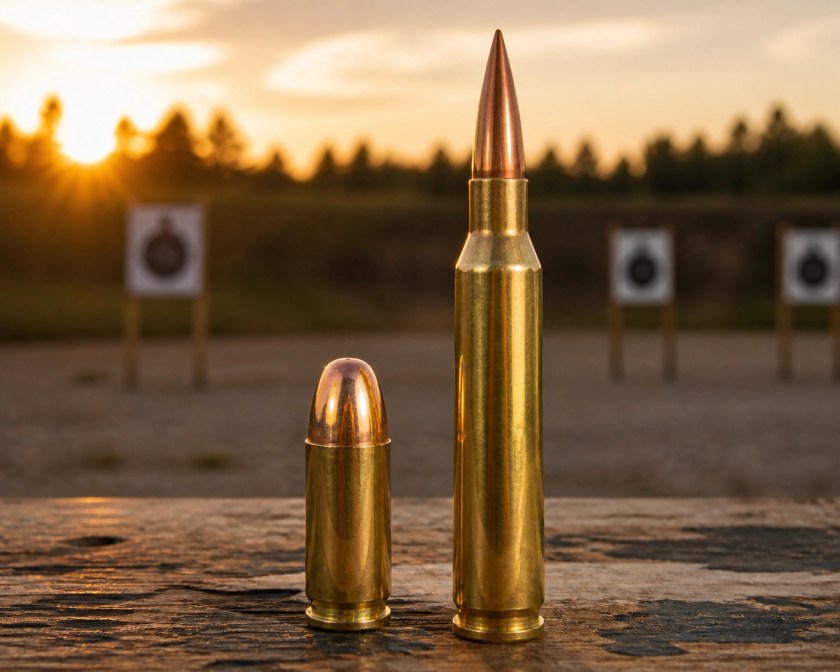
To really understand the difference, we have to look at the numbers. The 9mm is a "fat and slow" round. It’s heavy but moves at subsonic or low supersonic speeds. The 5.56 is "small and fast," moving at speeds often exceeding 3,000 feet per second.
- 9mm: Typical 115gr or 124gr bullet. Great for close quarters, but energy drops off significantly after 50 yards.
- 5.56 NATO: Typical 55gr or 62gr bullet. Maintains enough energy to be effective at much longer distances.
Interestingly, the recoil difference is negligible for most shooters. 5.56 NATO generates about 4.5 ft-lbs of free recoil, which is only half a pound more than the 9mm. This makes the 5.56 incredibly controllable, even for smaller-framed individuals.
Survival Hardware: Beyond the Caliber
Your choice of caliber is only as good as the platform you use. For 5.56, the AR-15 platform is the gold standard due to its modularity. If you’re looking for something more compact, we often get questions about kel tec plr 16 accessories because that platform offers rifle power in a very small package.
If you’re on a budget, don’t feel like you have to spend thousands. There are plenty of budget shotguns and entry-level rifles that will serve you well in a pinch. The key is to find something reliable and spend the rest of your budget on training and ammo.
Speaking of budget, many survivalists also keep a "backup to the backup." We see a lot of interest in cheap 38 special ammo for small revolvers. While not a primary survival round for most, a snub-nose revolver in 38 Special is a great "kit gun" to keep in a pocket or a vehicle stash.
Logistical Considerations: Scavenging and Availability
In a long-term survival scenario, you have to think about where your next box of ammo is coming from.
- 9mm: Found in almost every police station, gun store, and civilian home in America.
- 5.56 NATO: The standard military and law enforcement rifle round.
Both are incredibly common, but the 5.56 might have a slight edge in a truly "end of the world" scenario due to military stockpiles. However, for most likely scenarios: like a natural disaster or temporary civil unrest: having a stockpile of Federal 5.56 or Winchester 9mm at home is more important than what you might find on the road.
The "Everything" Kit: Why Not Both?
Most experienced survivalists don’t actually choose just one. They follow the "two is one, one is none" rule. A common setup is a 5.56 rifle for primary defense and hunting, paired with a 9mm sidearm for personal protection and backup.
If you’re looking to round out your kit, don’t forget the specialty items. For example, if you carry a multi-caliber survival gun, keeping some 410 slugs for sale in your bag can give you an extra layer of versatility for small game or close-range defense.

Final Verdict: Which One Wins?
If we had to pick just one for a survival kit?
The 5.56 NATO is the winner for general survival.
The ability to defend yourself at 200 yards, the flatter trajectory, and the superior terminal ballistics make it the more versatile tool. In a survival situation, you can't always choose the distance of your engagement. The 5.56 NATO gives you options that the 9mm simply can't.
However, if your survival plan involves staying strictly in an urban environment where space is at a premium and concealment is king, the 9mm is a fantastic choice.
Quick Summary Table
| Feature | 9mm Parabellum | 5.56 NATO |
|---|---|---|
| Effective Range | 50-100 Yards | 300+ Yards |
| Weight | Very Light (High capacity) | Moderate |
| Recoil | Extremely Low | Low |
| Stopping Power | Moderate (Expansion) | High (Fragmentation) |
| Best Use | Concealed Carry / PCC | Home Defense / Hunting / Range |
Whatever you choose, the most important thing is to have quality gear and the training to use it. Here at Wholesale Hunter, we’re committed to getting you the best deals on the ammo and accessories you need to stay prepared. Whether you’re looking for a new optic for your rifle or just stocking up on bulk 9mm, we’ve got your back.
Stay safe out there, keep your powder dry, and happy prepping!