

Let’s be real for a second, inflation is hitting everyone where it hurts. Whether you’re at the gas pump or the grocery store, your dollar just doesn’t seem to go as far as it used to. But here’s the good news: in the world of firearms, you can still find an absolute tank of a weapon without emptying your savings account.
I’m Jason Marsh, and here at Wholesale Hunter, I get asked all the time: "Jason, can I actually get a reliable shotgun for under 300 bucks?"
The answer is a resounding yes.
In fact, some of my favorite "truck guns" and home defense setups fall right into this price bracket. You don't need a $2,000 Italian masterpiece to protect your front door or clear some brush on the back forty. You need something that goes bang every single time you pull the trigger. Today, we’re breaking down how to navigate the world of budget shotguns and which models actually deserve a spot in your safe.
Why the Pump-Action is King of the Budget Category
When you’re looking at a sub-$300 price point, you’re going to see two main types of guns: pump-actions and single-shots. You might see a stray semi-auto from a brand you’ve never heard of, but I’m going to give you some veteran advice right now: Stick to the pump.
Semi-automatic shotguns rely on the energy of the shell to cycle the next round. To make a semi-auto reliable at a low price point is incredibly difficult. Cheap semi-autos are notorious for being "ammo sensitive": meaning they might cycle heavy buckshot just fine but choke on light birdshot.
A pump-action shotgun, however, is manually operated. You are the engine. Because you are physically moving the slide to eject the old shell and chamber the new one, these guns are inherently more reliable with a wider variety of ammunition. Whether you’re running 410 slugs for sale or heavy 12-gauge turkey loads, a pump-action just works.

The Gold Standard: Mossberg Maverick 88
If you’ve spent more than five minutes researching budget shotguns, you’ve heard of the Maverick 88. It is widely considered the "gold standard" for a reason. Manufactured by Mossberg, it’s essentially the little brother to the legendary Mossberg 500.
What makes it so good?
- Interchangeability: Most Mossberg 500 barrels will fit the Maverick 88. This means you can buy a 18.5-inch barrel for home defense and swap it for a 28-inch barrel when bird season rolls around.
- Dual Extractors: It features dual extractors and twin action bars, which prevents the forend from twisting and binding during rapid fire.
- Simplicity: It’s a no-frills, rugged machine.
The Maverick 88 usually sits comfortably under that $300 mark, making it the top pick for anyone who wants a "one and done" firearm. You can check out our current Mossberg inventory here to see what's in stock.
The Modern Workhorse: Stevens 320
Coming in hot as a direct competitor to the Maverick is the Stevens 320 (by Savage Arms). The 320 is based on the Winchester 1300 design and features a rotary bolt. This makes the action incredibly fast and smooth for a budget-friendly gun.
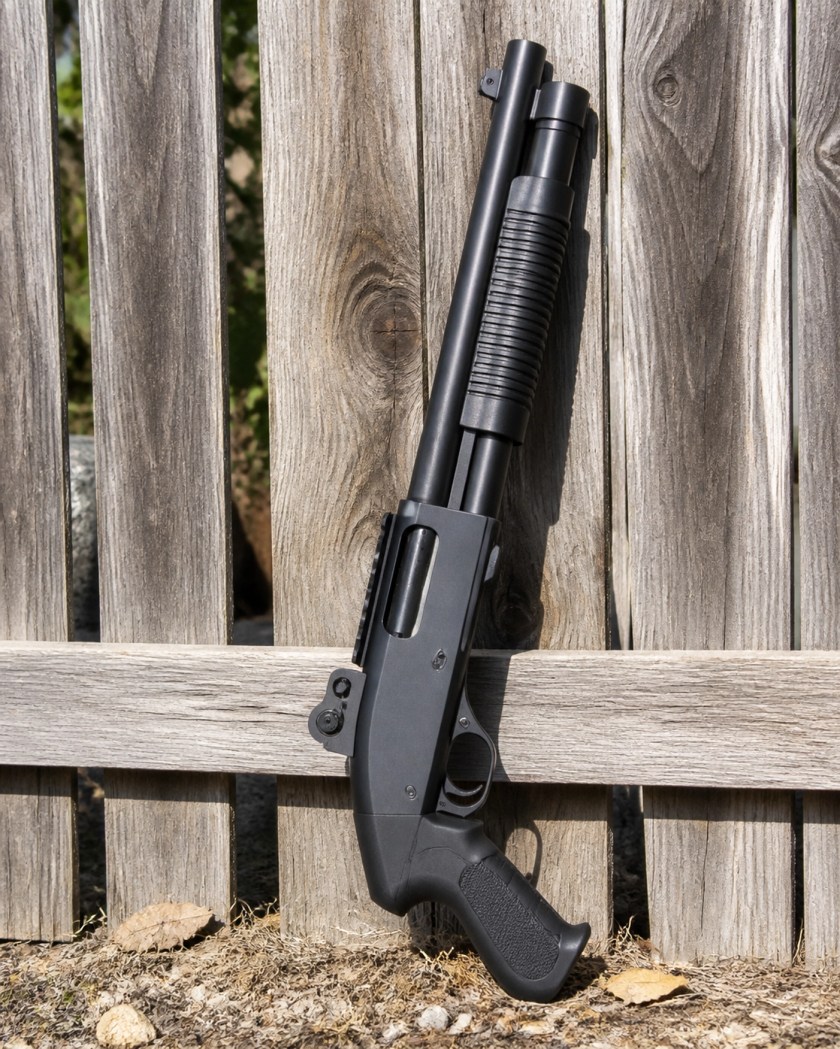
One thing I love about the Stevens 320 is that it often comes from the factory with features you’d usually pay extra for, like pistol grips or ghost ring sights. If you’re looking for something that feels a bit more "tactical" right out of the box, the Stevens 320 Security models are hard to beat.
The build quality is solid, though the aftermarket support isn't quite as massive as Mossberg’s. However, for a gun that’s going to live behind your bedroom door or in the rack of your UTV, it’s a phenomenal value.
Understanding Gauges: 12 vs. 20 vs. .410
Choosing the gun is only half the battle; you also have to choose the gauge. This choice should be dictated by who is using the gun and what they’re using it for.
- 12 Gauge: The most popular choice. It has the most "stopping power" and the widest variety of ammo available. If you can handle the recoil, this is the one to get.
- 20 Gauge: A great middle ground. It offers about 75% of the power of a 12 gauge with significantly less kick. It's perfect for smaller-framed shooters or those who just don't want to deal with a bruised shoulder after a day at the range.
- 410 Bore: This is the smallest of the bunch. While it’s often touted as a "beginner" gauge, it actually requires more skill to hunt with because the shot cloud is so small. However, for home defense in a pinch, or for pest control, it’s very capable. If you’re looking for specific loads, we often carry 410 slugs for sale for those who want maximum punch from the small bore.
Is a Shotgun Right for You?
I’m a shotgun guy, but I’ll be the first to admit they aren't for everyone. They are long, heavy, and have a lot of recoil. If you find that a 12-gauge is just too much to handle, don't feel like you have to force it. Many people find that a reliable revolver or a compact pistol is a better fit for their home defense needs.
For example, if you're looking for something with less recoil and a simpler manual of arms, you might want to look into a handgun. We often have deals on cheap 38 special ammunition and revolvers that provide a great alternative for those who aren't comfortable with the "thump" of a budget shotgun.

Features to Look For (And What to Skip)
When you’re shopping for budget shotguns, it’s easy to get distracted by "tacticool" accessories. My advice? Keep it simple.
What You Need:
- Reliable Action: Stick to names like Mossberg, Stevens, or Stoeger.
- A Solid Buttstock: Folding stocks look cool, but they usually hurt to shoot. A standard synthetic stock is your best friend.
- Clean Sights: Whether it’s a simple brass bead or ghost rings, make sure you can see them clearly.
What You Can Skip:
- Cheap Optics: A $30 red dot will likely shatter under the recoil of a 12-gauge slug. Stick to the iron sights.
- Flashy Heat Shields: They look cool in movies, but they mostly just add weight and can get in the way of a good sight picture.
If you eventually want to customize your rig, it's better to start with a solid base. While we talk a lot about Kel Tec PLR 16 accessories and other modular platforms, shotguns are a bit different. Your best "accessory" for a budget shotgun is a good shell carrier to keep extra ammo on the gun.
Maintenance: Treat Your Budget Gun Right
Just because you paid less than $300 doesn't mean you should treat the gun like junk. In fact, budget firearms often have finishes that aren't quite as corrosion-resistant as their $1,000 counterparts.
After a day in the field or at the range, give it a quick wipe-down with a light coat of oil. Check the magazine tube for any debris and ensure the action remains smooth. A little bit of hoppe's and a cleaning kit goes a long way in ensuring that "cheap" gun lasts a lifetime.

Final Thoughts: The Best Bang for Your Buck
Choosing the best shotgun under $300 comes down to one word: Reliability.
If I had to pick one for my own family today, I’d lean toward the Maverick 88 for its sheer track record and parts compatibility. However, the Stevens 320 is a very close second and offers a lot of features for the price.
Remember, the best gun is the one you have with you and the one you know how to use. Once you pick up your new shotgun, spend the rest of that $300 budget on some practice ammo and get out to the range.
Whether you’re looking for a dedicated home defense tool, a truck gun, or just something to have some fun with at the clay range, Wholesale Hunter has you covered. We're constantly updating our inventory with the latest deals on firearms and gear, so keep an eye on our new arrivals.
Stay safe out there, and happy shooting!
: Jason Marsh
Owner, Wholesale Hunter